
Maâti
Monjib
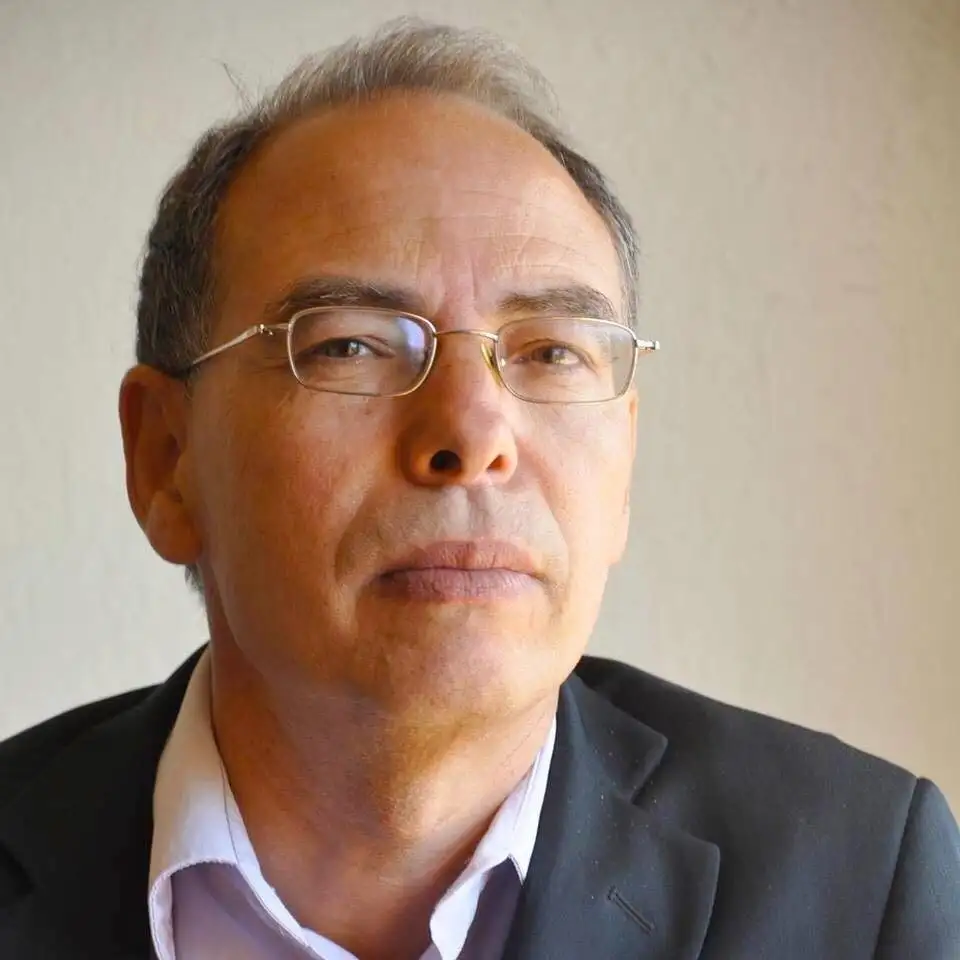
Maâti Monjib is a French and Moroccan historian who has led associations defending press freedom and investigative journalism in Morocco. A royal pardon in July 2024 covered his 2021 conviction, but a money-laundering investigation remains open and he was stopped from leaving Morocco again in March and June 2026.
- Country
- Morocco
- Role
- Academic / researcher
- Arrested
- 1995
- Sentence
- One year in prison (Rabat Court of First Instance, 27 January 2021); covered by a royal pardon in July 2024.
- Status
- At liberty
- Arrested
- 1995
- Sentence
- One year in prison (Rabat Court of First Instance, 27 January 2021); covered by a royal pardon in July 2024.
- Judicial status
- Pardoned
- Restrictions
- Travel ban · Asset freeze
- Name in Arabic
- المعطي منجب
- Charges
- Threatening the internal security of the State (convicted 2021, pardoned 2024)
- Fraud (convicted 2021, pardoned 2024)
- Money laundering (separate investigation opened October 2020, still open)
The arrest, and what followed.
Update, 12 November 2026: Maâti Monjib is at liberty but remains barred from leaving Morocco: on 4 June 2026 he was again stopped at Rabat-Salé airport on his way to a conference in Paris, his second blocked journey since 30 March 2026. The money-laundering investigation against him remains open and his bank accounts remain frozen; no newer development was found when this record was checked.
Background and Work
Maâti Monjib is a French and Moroccan historian and journalist who has dedicated his career to press freedom and anti-corruption work in Morocco. He serves as President of Freedom Now, an association defending freedom of expression and journalism, and co-founded the Moroccan Association for Investigative Journalism (MAIJ), which investigates and exposes corruption.
His work centres on creating institutional support for investigative reporters and defending the rights of journalists operating under pressure. This sustained focus on transparency and accountability has made him a target of state security agencies.
The 2015 Charges and Their Resurfacing
In 2015, Moroccan authorities first brought charges of "threatening the internal security of the State" against Monjib and several other human rights defenders. The case lay dormant for years before resurfacing in 2020 with additional allegations.
On 29 December 2020, police arrested Monjib without a warrant at a restaurant in Rabat, and an investigative judge at Rabat First Instance Court ordered his preventive detention on a new charge of money laundering. An investigation session was scheduled for 20 January 2021.
Conviction in Absentia
On 27 January 2021, the Court of First Instance in Rabat convicted Monjib of threatening the internal security of the state and sentenced him to one year in prison. The hearing was conducted in absentia: neither Monjib nor his lawyers were permitted to attend. The verdict was delivered without the defendant present to contest the charges or cross-examine evidence.
Hunger Strike and Conditional Release
Monjib was held in El Arjat 2 prison in Salé, near Rabat. On 4 March 2021, he began an open-ended hunger strike to protest his detention, the conviction, and the procedural irregularities that had marked the case. The strike continued for weeks.
He was conditionally released on 23 March 2021, though the legal proceedings against him remained active. Multiple appeal hearings followed, each rescheduled. An 8 April 2021 hearing before the Appeals Court in Casablanca was postponed to 10 June 2021.
Appeals and Ongoing Restrictions
On 30 September 2021, Monjib arrived at the Administrative Court of Appeal in Rabat for another hearing. Approximately two hundred security agents surrounded the courthouse, half of them helmeted and armed with sticks and shields. The deployment appeared designed to prevent any public gathering in his support; the agents dispersed after Monjib and his lawyer left.
The hearing was rescheduled again to 2 December 2021 due to the absence of other co-defendants. His case was to be heard alongside several other defenders facing the same charge of threatening state security.
Asset Freeze and Defamation
Monjib's bank account and credit card were frozen without prior notification, leaving him without access to income. State-owned media outlets have conducted defamation campaigns against him, accusing him of inciting violence and embezzling civil society funds. These smear campaigns have accompanied the judicial harassment, amplifying the pressure on him and his family.
International Context
Monjib's case exemplifies the pattern of judicial harassment facing defenders of press freedom in Morocco. The resurfacing of old charges, the use of national-security statutes to criminalise journalism advocacy, the asset freezes, and the coordinated media defamation campaigns together illustrate the toolbox deployed against those who challenge official narratives.