
Sherifa
Riahi
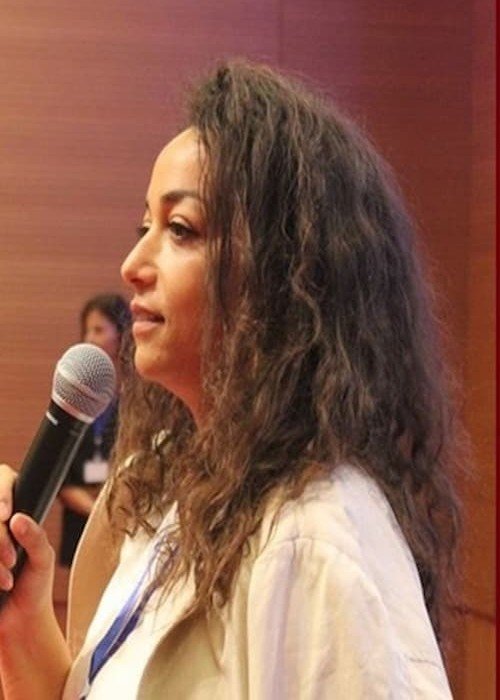
Sherifa Riahi is the former executive director of Terre d'Asile Tunisie, an organization that supports asylum seekers, refugees and migrants, and was prosecuted for aiding irregular migrants. She was arrested in May 2024 on charges including money laundering and forming a criminal group; the financial charges were dropped at the close of the investigation, and on 5 January 2026 a Tunis court gave her a two-year suspended prison sentence and she was released.
- Country
- Tunisia
- Role
- Lawyer
- Arrested
- 7 May 2024
- Sentence
- Two-year suspended prison sentence (5 January 2026, first instance).
- Status
- At liberty
- Arrested
- 7 May 2024
- Sentence
- Two-year suspended prison sentence (5 January 2026, first instance).
- Judicial status
- Convicted, not final
- Name in Arabic
- شريفة الرياحي
- Charges
- Money laundering and illicit enrichment (dropped during the investigation)
- Forming a group to attack persons and property (dropped during the investigation)
- Complicity in abusing a public official's status to obtain undue advantage and harm the administration
- Sheltering people who entered or left Tunisia irregularly and facilitating the irregular entry or stay of a foreigner (convicted, 5 January 2026)
The arrest, and what followed.
Background and Work
Sherifa Riahi served as executive director of Terre d'Asile Tunisie, a Tunisian organization supporting asylum seekers, refugees and migrants. She left the post in March 2023, about 14 months before her arrest. Tunisia has become a major transit and destination country for migrants from sub-Saharan Africa, and organizations like Riahi's have provided legal aid, humanitarian assistance, and advocacy in an increasingly hostile political environment.
Since 2023, the Tunisian government has intensified its rhetoric and legal action against civil society actors involved in migration issues. President Kais Saied has repeatedly accused such organizations of facilitating irregular migration and undermining state sovereignty. This climate set the stage for the prosecution of Riahi and her organization.
The Arrest and Charges
Riahi was arrested on 7 May 2024. The charges brought against her included money laundering and illicit enrichment, forming a group to attack persons and property, complicity in abusing an official's status for undue advantage and harm to the administration, and aiding, transporting, and sheltering foreign nationals in an irregular situation in Tunisia.
The charge of aiding irregular migrants criminalized assistance that international humanitarian and refugee law may require or permit. The money-laundering and criminal group charges transformed civil society funding and programming into national-security threats. These are charges typically reserved for terrorism, organized crime, or corruption, not for organizations providing legal and humanitarian assistance to vulnerable populations.
Legal Proceedings and Verdict
In January 2025 the investigating judge dropped the money laundering and group charges and referred her for trial on a misdemeanour of sheltering a foreigner. In February 2025, on the prosecution's appeal, the indictment chamber of the Tunis Court of Appeal reinstated some of the initial charges, while confirming that the money laundering charges and the case against the organization itself were dropped. On 5 January 2026, after about 20 months in pretrial detention, the Tunis Court of First Instance convicted her of sheltering people who entered or left Tunisia irregularly and of facilitating the irregular entry or stay of a foreigner, and gave her a two-year suspended prison sentence; she was released that night. The money-laundering and other financial charges had been dropped at the close of the investigation.
The court did not acquit her. The prosecution and her pretrial detention subjected Riahi and her organization to sustained legal pressure and public stigma.
Context and Implications
Riahi's prosecution is part of a wider pattern in Tunisia. Civil society organizations working on migration, human rights, and political accountability have faced arrests, asset freezes, travel bans, and judicial harassment since President Saied's 2021 suspension of parliament and consolidation of executive power. The charges against Riahi mirrored those used against journalists, trade unionists, lawyers, and other defenders.
The criminalization of assistance to migrants has had a chilling effect across the Tunisian civil society sector. Organizations have scaled back programming, closed offices, or ceased public advocacy for fear of prosecution. Legal representatives like Riahi bear personal risk for the institutional work they facilitate.
Her release on a suspended sentence offers limited relief in a context where the legal framework remains unchanged and the political will to prosecute defenders persists. Her case demonstrates how procedural outcomes can end individual prosecutions without addressing the systemic use of criminal law to silence dissent and solidarity.