
From Commitments to Action: A Call on Morocco’s New Parliament to Protect Human Rights
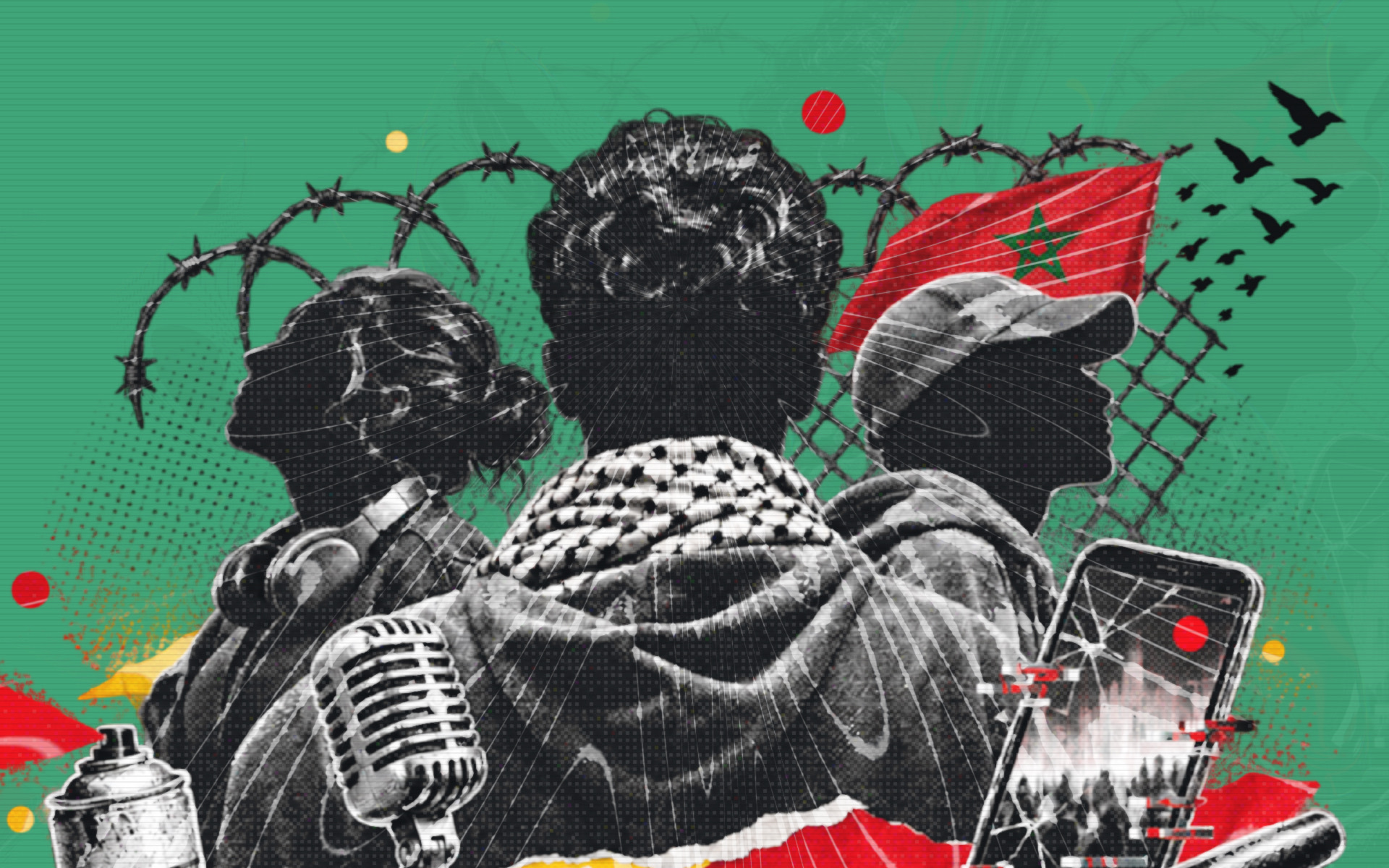
Following the parliamentary elections of 23 September 2026, the Authenticity and Modernity Party (PAM), which won 97 of the 395 seats, formed a governing coalition with three other parties. Headed by Fatima Ezzahra El Mansouri, the new government has pledged to strengthen the rule of law, protect human rights and freedoms, improve public services and address the country’s social and economic challenges. On 9 October, King Mohammed VI called on the new Parliament and government to make the new term a “real turning point” for Morocco. Both his opening speech and the government’s programme placed particular emphasis on young people, equal opportunities, employment and restoring public confidence in institutions. Yet many longstanding social and human rights concerns remain unresolved, including persistent inequalities in access to healthcare and education, high youth unemployment, regional disparities and discrimination against women and marginalized groups.
These commitments come amid continued restrictions on civic space in Morocco. Journalists, activists, artists and social media users have faced prosecution for peaceful expression and criticism of the authorities, while protesters and social movement participants have been arrested and imprisoned. The continued detention of Hirak Rif activists and people arrested during the Gen Z protests reflects the persistence of these concerns.
The new Parliament and government must take concrete steps to reverse this record. They should release all those imprisoned solely for peacefully expressing their views or participating in social movements, drop charges brought against people for exercising their fundamental rights, and end the prosecution of individuals for organising or taking part in peaceful protests. They must also guarantee that everyone can exercise their rights to freedom of expression, association and peaceful assembly without fear of arrest or prosecution.
The government’s commitments will be credible only if it takes concrete steps to protect fundamental freedoms, uphold fair trial rights and ensure equal application of the law.
The cases highlighted below illustrate a broader pattern of criminal proceedings and imprisonment against individuals for expressing criticism, challenging authority, engaging in artistic expression, defending human rights and documenting or participating in social protests. They include artists and rappers, human rights defenders, activists and people involved in protest movements. While the circumstances of each case differ, they raise common concerns about the use of criminal law to restrict peaceful dissent and discourage public criticism of the authorities.
The individual cases
Yasser Mounbir — 22-year-old graffiti artist serving a four-year prison sentence over drawings of the King
Yasser Mounbir, a 22-year-old Moroccan graffiti artist and illustrator, was arrested on 15 June 2026 and placed in pre-trial detention at Oukacha prison in Casablanca. His arrest followed the publication of satirical drawings of King Mohammed VI on Instagram, depicting the monarch in different costumes and, in some cases, as an animal. Moroccan authorities initially prosecuted Mounbir for “outrage to a constitutional institution through electronic means” and “outrage to public officials”, according to AFP. The first charge concerned his drawings of King Mohammed VI. Article 179 of the Moroccan Penal Code criminalises “defamation, insult or offense against the person of the King”, punishable by up to two years in prison, with penalties doubled when the offence is committed publicly, including through electronic means.
The second charge reportedly concerned an alleged altercation with a police officer, a version disputed by people close to Mounbir, according to Le Monde, which also reported that Article 179 was invoked during the initial investigation. His trial before the Casablanca Court of First Instance in Aïn Sebaâ was repeatedly postponed, and requests for provisional release were rejected. After 18 hearings and more than four months in pretrial detention, the court found him guilty of insulting the King and public officials on 30 October 2026 and sentenced him to four years in prison and a fine of MAD 40,000. His lawyers announced that they would appeal.
According to Le Monde, Mounbir’s lawyers challenged the investigation and the legal basis of the charges, arguing that procedural violations had occurred and seeking his acquittal. The newspaper also reported that visits to Mounbir at Oukacha prison in Casablanca are restricted to his family and lawyer, and that his lawyer expressed concern about his psychological state in detention. The Moroccan Association for Human Rights (AMDH) condemned his four-year sentence as disproportionate and called for his release.
Tarek Tazi (T-Flow) — One-year prison sentence upheld on appeal, increased from ten months at first instance
Rapper Tarek Tazi, known as T-Flow, was arrested on 12 August 2026 at his family home in Aïn Kansara, in Moulay Yacoub province, near Fez. His arrest followed the publication of an Instagram video criticising the government led by Aziz Akhannouch and accusing it of harming Moroccan citizens.
He was prosecuted for insulting public officials in the exercise of their duties, insulting a constituted body, and inciting the commission of crimes and misdemeanours through electronic means. The Fez Court of First Instance sentenced him to ten months in prison and a fine of MAD 1,000 on 10 September. On 27 October, the Court of Appeal increased his sentence from ten months to one year. Tazi remains detained at Bourkaiz Local Prison near Fez. The sentence raises concerns about the use of criminal sanctions against artists for criticising public officials. Article 25 of the Moroccan Constitution guarantees freedom of opinion and expression, as well as freedom of artistic creation and publication.
Saïda El Alami — human rights defender serving a three-year sentence
Saïda El Alami, a Moroccan human rights defender and blogger, was arrested in Casablanca on 1 July 2025 after livestreaming a protest over deaths in custody in Morocco. She was prosecuted on charges of “insulting a legally constituted body,” “insulting the judiciary” and “publishing and disseminating false allegations”. On 16 September 2025, the Aïn Sebaâ Criminal Court sentenced her to three years in prison and a fine of MAD 20,000. The Casablanca Court of Appeal upheld her conviction and sentence on 17 December 2025.
El Alami had previously been prosecuted over her public statements. Arrested in March 2022 over Facebook posts criticising the security services and alleging judicial corruption, she was sentenced to two years in prison, increased to three on appeal in September 2022. In May 2023, she received a separate two-year sentence for statements made during her trial, including charges of offending the King and insulting a magistrate or public official. She was released in July 2024 under a royal pardon.
Saïda El Alami is currently detained at El Jadida 2 prison. Since her arrest, she has undertaken several hunger strikes to protest her detention and prison conditions, including in July and November 2025, and April and June 2026. Her latest hunger strike began in October 2026.
According to information shared with HuMENA by a family member, El Alami’s parents, who live in Casablanca and regularly travel to El Jadida to visit her, were unable to see her during the October hunger strike. The family also reported that she had stopped making her usual telephone calls after the strike and that they went for more than a week without hearing from her. They said they had received no clear information about her health or whether she was receiving appropriate medical care. On 15 October, the prison administration disputed the family’s account, stating that her mother had visited on 14 October, that El Alami had declined to attend the visiting room and that medical staff were monitoring her condition.
In an update shared with HuMENA on 5 November, her family said that El Alami had experienced health problems following the hunger strike, but that her condition was improving and she was taking her medication. However, her lawyers have since been denied visits by the prison administration, without explanation, according to a close family member. The family also reported that prison staff search her cell after visits and remove her notes, notebooks and other written materials. One family member told HuMENA that El Alami had stopped eating prison meals because they reportedly cause stomach problems. She remains in an individual cell at her own request, so she can read and write. Her family remains concerned about her health, particularly given her chronic conditions and repeated hunger strikes.
HuMENA is concerned about El Alami’s repeated hunger strikes, the lack of clear information about her health during the latest strike and the reported refusal to allow her lawyers to visit her. HuMENA calls for her immediate and unconditional release and the quashing of her conviction, which stems from the exercise of her rights to freedom of expression and peaceful assembly. Pending her release, the authorities must ensure that she receives adequate medical care, in line with medical ethics, has regular access to her family and lawyers, and is held in conditions that meet international standards.
Mohamed Ziane — former human rights minister serving successive prison sentences
Mohamed Ziane, an 84-year-old lawyer, former president of the Rabat Bar Association and former human rights minister, has been detained since 21 November 2022. His first conviction followed a case involving 11 charges, including insulting public officials and institutions, defamation, and statements allegedly intended to influence judicial proceedings. He was sentenced to three years in prison in February 2022, a sentence upheld on appeal in November 2022. Amnesty International raised concerns about the fairness of the proceedings and called for his release.
While serving his original sentence, Ziane was placed in pretrial detention in a second case concerning the alleged misuse of public funds allocated to the Moroccan Liberal Party for its 2015 election campaign. The case went through several rounds of appeal. An initial five-year sentence was reduced to three years in May 2025, but the Court of Cassation later overturned that ruling. On 8 April 2026, the Rabat Court of Appeal sentenced him again to five years in prison. He has challenged the ruling before the Court of Cassation. Ziane completed his original three-year sentence on 21 November 2025 but remains in detention over the second case. His requests for provisional release were rejected in February and June 2026. Amnesty International considers his detention arbitrary. In August 2026, the organisation also reported that he was being held in prolonged solitary confinement, without access to other prisoners or the exercise yard.
The UN Human Rights Committee has also raised concerns about Ziane’s treatment in prison. In February 2024, it asked Morocco to adjust his sentence on humanitarian and medical grounds and to protect him and his family from reprisals. On 22 July 2026, after receiving new information about restrictions on his access to food and money in prison, the Committee issued further interim measures. It called on the authorities to ensure that he had enough food and water, access to necessary medical care, and protection from any measures that could put his physical integrity at risk or amount to reprisals against him or his family.
On 30 October, Ziane’s family said he had informed them that he had been diagnosed with a prostate tumour. They said they had received no medical information confirming whether the tumour was benign or malignant and called on the authorities to disclose his medical condition and ensure he received appropriate treatment. On 2 November, the administration of El Arjat 1 prison denied that Ziane was being deprived of medical care. It said he was under regular medical supervision, had undergone specialist consultations and examinations, and had previously refused transfers to an outside hospital. However, it did not disclose the results of his examinations.
Ziane’s case raises concerns about the use of criminal proceedings against people who criticise the authorities. After completing his original three-year sentence in November 2025, he remained in prison following a separate case in which he received a further five-year sentence. The successive convictions have extended his imprisonment, while his detention conditions raise additional concerns. In August 2026, Amnesty International reported that he was being held in prolonged solitary confinement, without access to other prisoners or the exercise yard.
Ibtissame Lachgar – Feminist and LGBTQI+ rights activist prosecuted over social media post
Ibtissame Lachgar, a Moroccan feminist and LGBTQI+ rights activist and co-founder of MALI, was arrested in Rabat on 10 August 2025 after posting a photo of herself wearing a T-shirt reading “Allah is lesbian”. The accompanying text criticised religions for reinforcing patriarchal and misogynistic structures. She was prosecuted under Article 267-5 of the Penal Code for allegedly insulting Islam. On 3 September 2025, she was sentenced to 30 months in prison and fined MAD 50,000. The Rabat Court of Appeal upheld the sentence on 8 October 2025. After the post circulated, she also reported receiving death and rape threats. Her health has since deteriorated in detention. A survivor of bone cancer, Lachgar has a prosthesis in her left arm. FIDH and OMCT reported in September 2026 that she was suffering from serious complications with the prosthesis and needed urgent specialised medical care. They warned of the risk of irreversible damage, including possible amputation, and called for her immediate release.
Lachgar’s post challenged patriarchal and misogynistic religious norms and expressed support for lesbian and LGBTQI+ rights. By sentencing her for this post, the authorities criminalised her exercise of the rights to freedom of expression and belief, including her right to question religious norms and express views that challenge dominant interpretations. Her continued detention also puts her health at risk. A survivor of bone cancer with a prosthesis in her left arm, she requires specialised medical care.. HuMENA calls on the authorities to ensure that she receives the treatment she needs without delay and is held in conditions that respect her dignity and physical integrity.
Nasser Zefzafi and other Hirak Rif activists – Imprisoned for leading protests against the marginalisation of the Rif region
Nasser Zefzafi, one of the leaders of the Hirak Rif movement, was arrested on 29 May 2017 during the crackdown on protests in northern Morocco. The movement began in October 2016, following the death of fishmonger Mouhcine Fikri in Al Hoceima. Protesters called for better healthcare, education, jobs and infrastructure, and an end to the region’s long-standing marginalisation.
Zefzafi faced several charges, including undermining the internal security of the state, inciting violence against security forces, organising unauthorised demonstrations and participating in an armed rebellion. On 26 June 2018, he was sentenced to 20 years in prison, alongside three other leading activists: Nabil Ahamjik, Ouassim Boustati and Samir Ighid. Other defendants received sentences ranging from one to 15 years. The Court of Appeal upheld the sentences in April 2019, and the Court of Cassation upheld Zefzafi’s sentence in June 2021.
In August 2024, the UN Working Group on Arbitrary Detention found that Zefzafi’s detention was arbitrary under categories I, II, III and V, citing violations of his rights to liberty, freedom of expression and peaceful assembly, and a fair trial. It called for his immediate release, compensation and an independent investigation into the violations. He remains detained at Tangier 2 prison. His health has also raised concerns. In June 2026, the Committee for Justice reported that he was suffering from tremors and chronic dizziness and had been transferred to hospital several times. It called for independent medical care.
On 8 December 2025, Zefzafi began a hunger and thirst strike to protest the authorities’ failure to investigate threats against his life, after a video showing individuals threatening him circulated online. He suspended the strike the following day, after receiving confirmation that an investigation had been opened into his complaint, according to a message shared by his brother, Tarik Zefzafi.
Other Hirak detainees also remain in prison. Nabil Ahamjik, who is serving a 20-year sentence, ended a ten-day hunger strike on 16 September 2026. His family said he had been protesting the lack of suitable conditions to continue his university studies and prepare his doctoral thesis in prison. The tenth anniversary of the Hirak protests was marked on 28 October 2026. A report published by Middle East Eye around the anniversary noted that six prominent movement figures remained in prison and that many of the social and economic demands behind the protests had yet to be addressed.
Yassine El Morabit – Sentenced over posts documenting protests and migration on social media
Yassine El Morabit, a 28-year-old blogger from Tangier, was arrested at his workplace on 20 August 2026 over videos and posts shared on his Facebook and Instagram accounts. The content documented social protests and migration towards Ceuta, including videos he had filmed or reposted. He was charged with “incitement to commit misdemeanours and felonies through electronic means” and “insulting public officials and constituted bodies in the exercise of their duties”. He was held in pretrial detention. His trial, initially scheduled for 24 August, was postponed to 31 August, when the Tangier Court of First Instance sentenced him to one year in prison. On 19 October, the Court of Appeal reduced the sentence to five months.
HuMENA reviewed the posts cited in the case and found no calls for violence, hatred, discrimination or racism. His prosecution raises concerns about the use of criminal charges against individuals who document protests and migration-related events. The Committee for Justice also reported that the hearings and initial judgment took place without a lawyer present, during a nationwide lawyers’ strike, raising further concerns about respect for his right to legal representation and a fair trial.
Gen Z 212 protesters – Arrests, prosecutions and prison sentences following youth-led protests
Young people across Morocco took to the streets from late September 2025, demanding better healthcare and education, more job opportunities and action against corruption. The authorities responded with mass arrests and prosecutions, including of minors. According to the Moroccan Association for Human Rights (AMDH), approximately 5,800 people were arrested in connection with the protests, and more than 2,400 were prosecuted. By 30 September 2026, 662 remained in prison, including minors. Some had received sentences of up to 15 years, while others were still awaiting trial.
Heavy sentences have continued to be handed down. In November 2025, the Guelmim Court of Appeal sentenced 17 people, including four minors, to a combined 117 years in prison. The sentences ranged from one year suspended to 15 years. The defendants faced charges including obstructing traffic, damaging public property, throwing stones at security forces and participating in unauthorised gatherings.
Families have continued to demand the release of those detained. On 26 September 2026, around 30 mothers and relatives gathered outside Parliament in Rabat. They spoke about the strain of visiting family members who had been in prison for nearly a year, as well as the impact of detention on their children’s education and future. Solidarity efforts have also continued under the slogan #FreeKoulch (Moroccan Derja for Free Them All). On 2 October, young people, former detainees, artists and families gathered in Rabat for an event featuring personal testimonies, music and photographs from the protests. AMDH continues to call for the release of detained protesters, including minors, and has raised concerns about the fairness of the trials and the severity of the sentences.
Under Article 25, Morocco’s Constitution guarantees freedom of thought, opinion and expression, including artistic creation. It also guarantees press freedom under Article 28 and peaceful assembly and association under Article 29. Article 22 protects physical and moral integrity and prohibits torture and ill-treatment, while Article 23 prohibits arbitrary detention and guarantees fair-trial rights and humane conditions of detention. Articles 117, 119 and 120 require the judiciary to protect fundamental rights, uphold the presumption of innocence and ensure fair trials within a reasonable time.
These constitutional guarantees are complemented by Morocco’s obligations. Article 19 of the International Covenant on Civil and Political Rights (ICCPR) protects the right to freedom of opinion and expression, including artistic expression, while Articles 18, 21 and 22 protect freedom of thought, conscience and religion, peaceful assembly and freedom of association. The Covenant permits restrictions on these rights only when they meet strict requirements of legality, necessity and proportionality. International standards further clarify the scope of these protections. In its General Comment No. 34 on Article 19, the UN Human Rights Committee confirms that freedom of expression extends to speech that may be considered deeply offensive. It also states that the mere fact that comments are considered insulting to a public figure is not sufficient grounds for imposing penalties. The ICCPR makes clear that public figures, including heads of state and government, must tolerate criticism and political opposition. By prosecuting and imprisoning individuals for peaceful criticism, artistic expression and protest, Morocco risks undermining the very freedoms the Covenant protects.
Moreover, under the Convention against Torture (CAT) and the International Covenant on Civil and Political Rights, Morocco must protect everyone in detention from torture and other cruel, inhuman or degrading treatment. These obligations also require the authorities to safeguard detainees’ physical and mental integrity, provide adequate healthcare, and respect their dignity, family contact and access to legal assistance. The UN Standard Minimum Rules for the Treatment of Prisoners (Nelson Mandela Rules) further set out the standards authorities must uphold, including access to healthcare, family visits and confidential legal assistance, and prohibit prolonged solitary confinement.
These cases show the gap between Morocco’s legal commitments and their implementation. Ending the prosecution of peaceful dissent, ensuring fair trials and protecting detainees’ rights require urgent action to bring practice in line with the Constitution and international obligations.
In light of the cases documented in this letter and the continued prosecution and imprisonment of journalists, human rights defenders, activists and artists for exercising their fundamental rights, HuMENA for Human Rights and Civic Engagement calls on the new government and Parliament to take concrete action to:
- Review and amend or repeal provisions of the Penal Code, including Articles 179, 267-5 and 299-1, which criminalise peaceful expression relating to the monarchy, religion and territorial integrity, as well as other provisions used to prosecute individuals for online expression, to bring them into line with Morocco’s international human rights obligations.
- Release all individuals detained solely for exercising their rights to peaceful protest and freedom of expression, including Hirak Rif activists, Gen Z protesters and individuals such as Yasser Mounbir, Nasser Zefzafi, Mohamed Ziane and Saïda El Alami.
- End the use of criminal proceedings and pretrial detention to silence critical voices, including journalists, human rights defenders, artists and social media users who document abuses, criticise public policies or express dissent.
- Protect the rights to peaceful assembly, association and protest, and end the use of force and criminal prosecutions to address social movements and peaceful demonstrations. Authorities should also ensure that people can document and report alleged abuses without fear of reprisals.
- Strengthen parliamentary oversight by tasking the House of Representatives’ Committee on Justice, Legislation, Human Rights and Liberties with holding regular hearings and questioning the General Delegation for Prison Administration and Reintegration, the Ministries of Justice and Interior on detention conditions, access to legal counsel and allegations of torture and ill-treatment.
- Use the King’s stated commitment to a new turning point as an opportunity to release all individuals detained solely for exercising their rights to peaceful protest and freedom of expression, and to review and amend or repeal Penal Code provisions and other legal provisions that criminalise the exercise of these rights.
Annex 1 – Additional Cases of Individuals Prosecuted for Exercising Their Freedom of Expression
El Mahdi Lyoubi (Mehdi Black Wind) – Prosecuted over song lyrics
Moroccan rapper and filmmaker El Mahdi Lyoubi, known as Mehdi Black Wind, was arrested in July 2026 after being prevented from returning to France, where he has lived since 2017. He was prosecuted under Article 179 of the Penal Code for allegedly insulting a constitutional institution, in a case linked to the lyrics of his songs. The provision carries a prison sentence of six months to two years and a fine of MAD 20,000 to 200,000. These penalties can be doubled when the offence is committed through public or electronic means. The hearings have been postponed several times. Hearings scheduled for 15 July, 22 July, 31 July and 2 October were successively adjourned. The hearing set for 5 November was also postponed, to 16 November 2026. Lyoubi spent 18 days in pretrial detention before being granted provisional release on 31 July. He remains at liberty while the proceedings continue.
His arrest prompted solidarity in Morocco and abroad. More than 500 people signed a call for his release, while the Moroccan Association for Human Rights, along with artists and cultural figures, publicly expressed support for him. Solidarity events and demonstrations were held in Casablanca, Paris, Amsterdam, Montreal and Zurich, including film screenings. As of 10 November 2026, the case remains ongoing and no verdict has been issued.
Mourad Habal – Prosecuted over Facebook posts and released after serving his sentence
Mourad Habal was arrested in Marrakech on 5 August 2026 and prosecuted under Article 299-1 of the Penal Code over Facebook posts concerning the deaths and fate of migrants during events in Ceuta and Melilla, and restrictions on peaceful protest. HuMENA reviewed the posts and found no direct call or encouragement to commit a criminal offense. Habal appeared before the police and the Public Prosecutor without a lawyer. His hearings were postponed from 7 to 12 August and then to 19 August. On 19 August, the Marrakech Court of First Instance sentenced him to four months in prison and a fine of MAD 1,000. The Marrakech-Menara section of the Moroccan Association for Human Rights criticised the conviction as an attempt to silence online expression and questioned the use of pretrial detention in such cases. Authorities prosecuted Habal under Article 299-1 for posts on migration and the right to peaceful protest, despite no direct call to commit a criminal offence. His conviction and four-month prison sentence illustrate the use of criminal law to restrict online expression. Habal has since been released after serving his sentence.
Ali Lmrabet – Journalist arrested at Tangier airport
French-Moroccan journalist Ali Lmrabet, a longstanding critic of the Moroccan authorities who lives in Barcelona, was arrested at Tangier Ibn Battuta Airport on 12 July 2026, shortly after arriving from Spain. He was transferred to the National Judicial Police Brigade in Casablanca and placed in police custody. On 14 July, the Public Prosecutor’s Office said his arrest was based on several outstanding warrants linked to online publications allegedly containing defamatory and insulting remarks about individuals and institutions, as well as statements considered offensive to legally established bodies.
Lmrabet told Le Monde that investigators questioned him about videos discussing what he called a “shadow structure” behind the exercise of power in Morocco. He said he was accused of defaming senior officials, including the police chief and a royal adviser, allegations he denied.
Lmrabet has faced prosecution over his journalism for more than two decades. In 2003, he was sentenced to four years in prison, later reduced to three on appeal, over articles, interviews and cartoons published in his newspapers, Demain and Doumane, which were also shut down. He was released in July 2004 following a royal pardon. In 2005, he was convicted of defamation over comments about Sahrawi refugees in the Tindouf camps and banned from practising journalism in Morocco for ten years, until April 2015. He has since continued his work from Barcelona. Lmrabet was released on 15 July after questioning, and his equipment was returned. However, the investigation remained open. The IFJ, CPJ and RSF called for the charges to be dropped. RSF stressed that his release did not mean the case was closed.
Media enquiries: info@humena.org
New publications, by email
Concise briefings on new HuMENA research, statements, and advocacy.
Subscribe