
Negad
El Borai
Lawyer and founder of the United Group, specialising in individual freedoms and property law. Charged in Egypt's foreign-funding case; subjected to five interrogations, travel ban, and asset freeze before charges were dropped in August 2021.
- Country
- Egypt
- Role
- Journalist
- Sentence
- No trial; charges dropped on 30 August 2021, with the investigative judge announcing that travel bans and asset freezes were removed. Case 173 was closed on 20 March 2024.
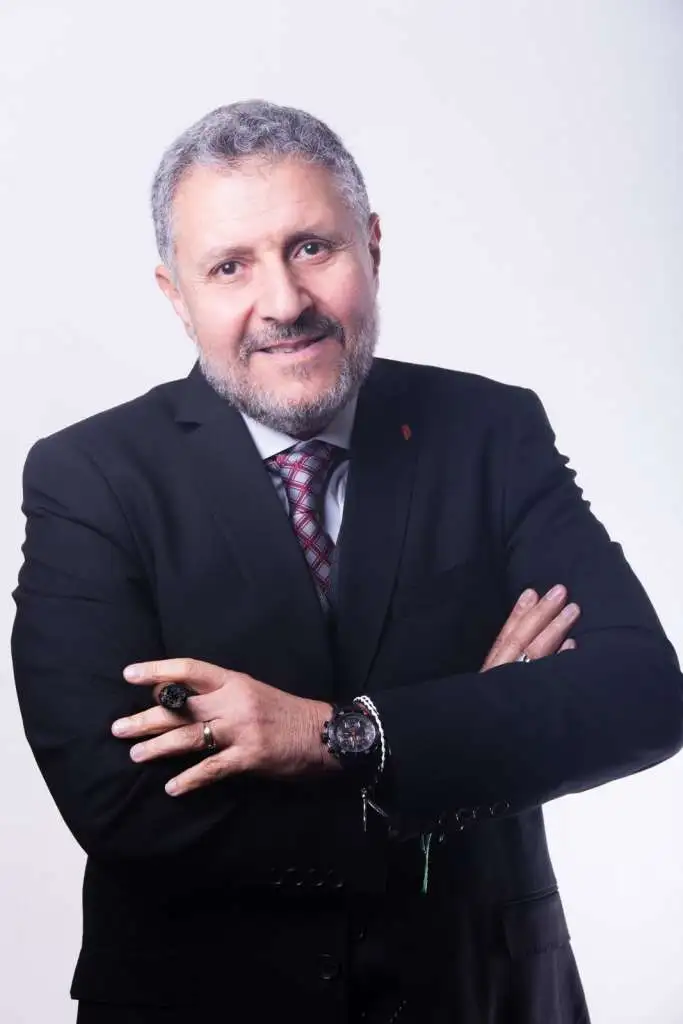
- Status
- At liberty
- Sentence
- No trial; charges dropped on 30 August 2021, with the investigative judge announcing that travel bans and asset freezes were removed. Case 173 was closed on 20 March 2024.
- Judicial status
- Case dropped
- Name in Arabic
- نجاد البرعي
- Charges
- Receiving illegal foreign funding
- Operating without legal permission
The cases, as we document them.
Where a case was replaced by a new one, the two are linked.
- Case173/2011
Questioned in the case
The foreign funding case
Investigation (the foreign funding investigation)
The investigating judge questioned him five times between 2015 and 2016 over charges of receiving foreign funding and running an unlicensed entity. He was released on bail, banned from travel and restricted from disposing of his assets. On 30 August 2021 an order of no grounds to initiate criminal proceedings was issued in his favour, and his name was announced removed from the ban lists.
Also named in this case: Aida Seif El-Dawla (travel-banned in connection with the case), Azza Soliman, Hoda Abdelwahab (travel-banned in connection with the case), Hossameldin Ali (questioned in the case), Mostafa Fouad (summoned)
The arrest, and what followed.
Update, 12 November 2026: this record was checked against current sources. Negad El Borai is free: the investigative judge dropped the foreign funding case against him on 30 August 2021 and announced that travel bans and asset freezes were removed, and the authorities announced the closure of Case 173 on 20 March 2024. Magdy Abdel Hamid, Hossameldin Ali and Azza Soliman were cleared in the same decision, and Amnesty International also named Esraa Abdel Fattah among those it covered.
Background and Work
Negad El Borai is a prominent figure in Egypt's human rights and legal-reform community. A lawyer by training, he served as head of the legal unit at United Group, a law firm focused on individual freedoms, property rights, and rule-of-law advocacy. He founded and led the Group for Democratic Development and served as secretary general of the Egyptian Organisation for Human Rights, one of the country's oldest independent human rights bodies.
El Borai also worked as a columnist for Al-Shorouk, a widely circulated independent newspaper, where he wrote on freedom of expression, assembly, and association. He was appointed to Egypt's National Council for Human Rights, a state-affiliated body meant to advise on rights policy, but resigned in January 2014, citing the council's failure to respond consistently to documented abuses during a period of escalating repression.
He was involved in drafting model legislation to criminalise torture, drawing on years of documentation work with survivors and civil society partners. That draft became a focal point of state scrutiny.
The Foreign-Funding Case and Repeated Interrogations
In 2011 Egyptian authorities opened Case No. 173, an investigation targeting civil society organisations on allegations of receiving unauthorised foreign funding and operating without proper registration. The case remained dormant for several years before resurfacing in 2015 as part of a broader crackdown on independent organisations and their leaders.
El Borai was summoned for interrogation on 21 May 2015 by an investigative judge at North Giza Court. The questioning centred on his involvement in drafting anti-torture legislation and followed a complaint by the Supreme Judicial Council. He was called in again on 3 March 2016, questioned for more than three hours and charged with receiving illegal foreign funding, establishing and running an illegal group, inciting disobedience of state authorities, disturbing public order and spreading false news, then released on bail. A fifth session set for 17 May 2016 was postponed, and he was questioned again on 5 June 2016.
The repeated interrogations formed part of a pattern affecting more than thirty-seven organisations and dozens of defenders, many of whom faced overlapping charges and parallel restrictions.
Travel Ban and Asset Freeze
On 26 January 2017 El Borai arrived at Cairo International Airport to board a flight to Jordan. Airport security prevented him from travelling after his name appeared on a list compiled by the investigating magistrate and the prosecutor general in connection with the foreign-funding case. The travel ban had been imposed without prior notice.
The ban was accompanied by an asset freeze affecting both his personal accounts and the institutional assets of United Group. Separately, on 31 July 2017 an administrative court upheld on appeal the Social Affairs Ministry's refusal to recognise United Group, barring the firm from holding workshops on the associations law.
Travel bans became one of the most common tools of restriction during this period, applied to more than a dozen defenders linked to the foreign-funding case, including Azza Soliman, Mozn Hassan, Hossameldin Ali, and others.
Case Closure and Lingering Restrictions
On 30 August 2021 the investigative judge authorised by the Cairo Court of Appeal to oversee Case No. 173 issued a decision dropping the charges against El Borai and three co-defendants: Azza Soliman, Magdy Abdel Hamid, and Hossameldin Ali. The decision also dropped charges against their respective organisations.
No trial took place; the charges were dropped. The decision also ordered the travel bans and asset freezes lifted, but further legal steps were needed to remove their names from official restriction lists and unfreeze their accounts. In March 2024 the authorities announced the closure of Case No. 173.
Context and Pattern
El Borai's case illustrates the use of prolonged investigation, asset control, and mobility restriction as forms of pressure that operate independently of judicial outcomes. The foreign-funding investigation served as the legal framework for measures that effectively paralysed civil society work, even in cases where no conviction was ever secured.
His resignation from the National Council for Human Rights in 2014 and his continued legal advocacy work during the period of investigation marked him as a defender unwilling to accommodate state narratives. The focus on the anti-torture draft law during interrogations underscored the state's sensitivity to documentation and legislative reform efforts that threatened to formalise accountability mechanisms.
-
Named in this file
Azza Soliman
“The freeze remained in effect even after criminal proceedings concluded, requiring separate administrative appeals to lift. Travel bans became one of the most common tools of restriction during this period, applied to more than…”