
Mhamed
Hali
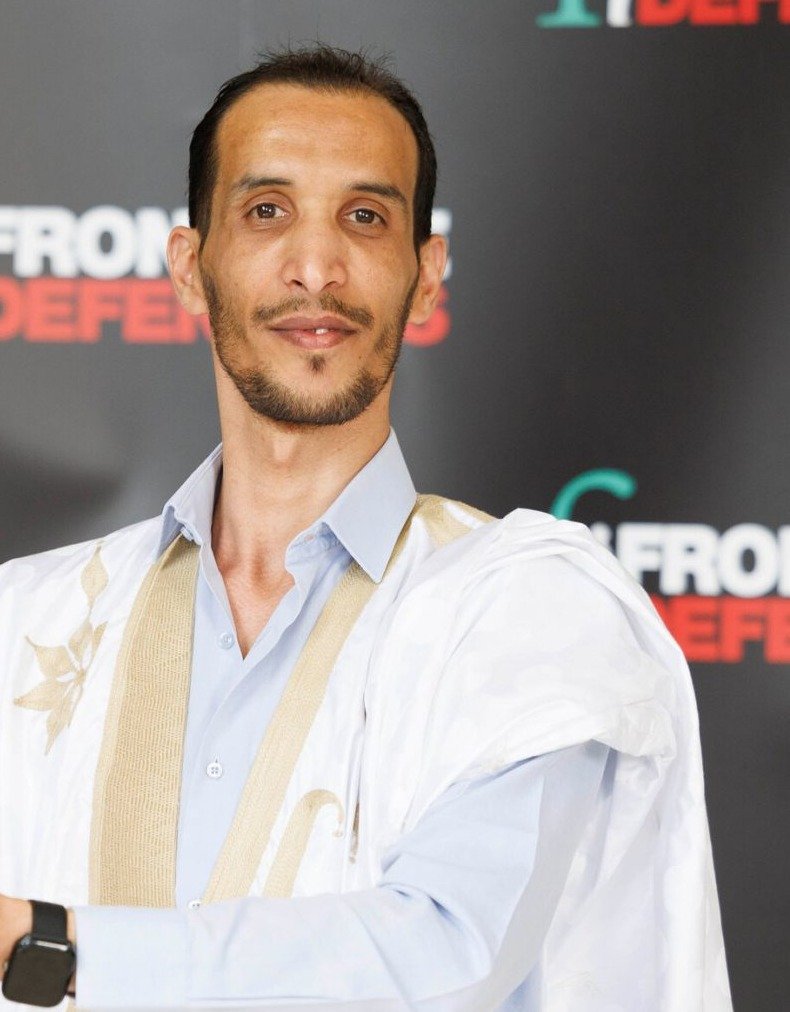
Mhamed Hali holds a doctorate in international humanitarian law and is Secretary General of the Association for the Protection of Sahrawi Prisoners in Moroccan Prisons. Morocco has blocked him from practicing law because of his advocacy for self-determination in Western Sahara.
- Country
- Western Sahara
- Role
- Lawyer
- Arrested
- 2007
- Status
- Pre-trial · no verdict
- Status
- At liberty
- Arrested
- 2007
- Name in Arabic
- امحمد الهالي
The arrest, and what followed.
Background and Work
Mhamed Hali is a human rights defender from Western Sahara who holds a doctorate in international humanitarian law. He serves as Secretary General of the Association for the Protection of Saharan Prisoners in Moroccan Prisons (LPPS), an organization that documents the detention conditions and legal treatment of Sahrawi prisoners held by Moroccan authorities. He is also a member of the Sahrawi Association of Victims of Grave Human Rights Violations Committed by the Moroccan State (ASVDH), which advocates for accountability and the right to self-determination for the people of Western Sahara.
Hali's work centers on legal protection and documentation. His organizations monitor trials, detention conditions, and patterns of persecution targeting Sahrawi human rights defenders. He has consistently and publicly supported the principle that the people of Western Sahara have a right to self-determination under international law, a position that has brought him into direct conflict with Moroccan state institutions.
He has paid for this activism since his student years. In 2007, Moroccan intelligence agents abducted him at the entrance to Laayoune and held him for more than a week without trial; he says he was tortured as punishment for his activism at university. In 2009 masked men attacked him in Marrakesh and threatened to kill him if he did not stop, and in 2012 he was attacked in Rabat in similar circumstances. His police complaints were never investigated. In May 2025 he received the Front Line Defenders Award for Human Rights Defenders at Risk.
The Application and Rejection
In October 2019, Hali applied for membership in the Agadir Bar Association. He had completed the bar aptitude examination, held Moroccan nationality, and submitted documentation showing no criminal record. Under Article 5 of Moroccan Law 28.08, which regulates admission to the legal profession, he met all formal requirements.
On 13 February 2020, the Agadir Bar Association rejected his application. The rejection rested on an investigation conducted under Article 11 of Law 28.08, which permits examination of an applicant's ethical conduct. The investigative report concluded that Hali was "not a person fit to practice" because he belonged to an organization "that denies Moroccan sovereignty over Western Sahara" and because "the concerned candidate is well known for his separatist and anti-territorial integrity attitudes."
The bar association did not dispute Hali's legal qualifications. It did not cite a criminal conviction, ethical misconduct in professional practice, or failure to meet statutory criteria. The sole basis for exclusion was his political opinion and organizational affiliation.
Appeal and Final Decision
Hali appealed the decision. He argued that his exclusion violated international legal protections for the independence of the legal profession. Article 10 of the UN Basic Principles on the Role of Lawyers prohibits discrimination against lawyers on the basis of political opinion. The principles require that governments and bar associations ensure equal access to the profession without regard to an applicant's political views or affiliations, except for nationality requirements.
On 27 June 2024, the Moroccan Court of Cassation upheld the Agadir Bar Association's original decision. Morocco's highest judicial authority affirmed that Hali could be barred from the legal profession because of his political opinions and his membership in human rights organizations advocating for self-determination in Western Sahara. The ruling finalized his exclusion and foreclosed any further domestic legal remedy.
Broader Context of Persecution
Hali's case fits within a documented pattern of systematic targeting of Sahrawi human rights defenders by Moroccan authorities. The UN Working Group on Arbitrary Detention has found that this pattern of persecution constitutes racial discrimination and aims to silence advocacy for the right to self-determination. Sahrawi defenders face travel bans, arbitrary detention, unfair trials in military courts, and obstruction of their professional and civil rights. Hali's exclusion from the bar is one mechanism among many used to limit the ability of Sahrawi advocates to operate within legal and institutional frameworks.
The ruling against Hali effectively criminalizes political opinion within the framework of professional regulation. By categorizing support for self-determination as evidence of unfitness to practice law, Moroccan judicial and professional bodies have converted bar admission into a tool of political control. Hali remains active in human rights documentation, but he has been permanently deprived of the right to represent clients, litigate cases, or practice the profession for which he trained.