
Ali
Akram al-Bayati
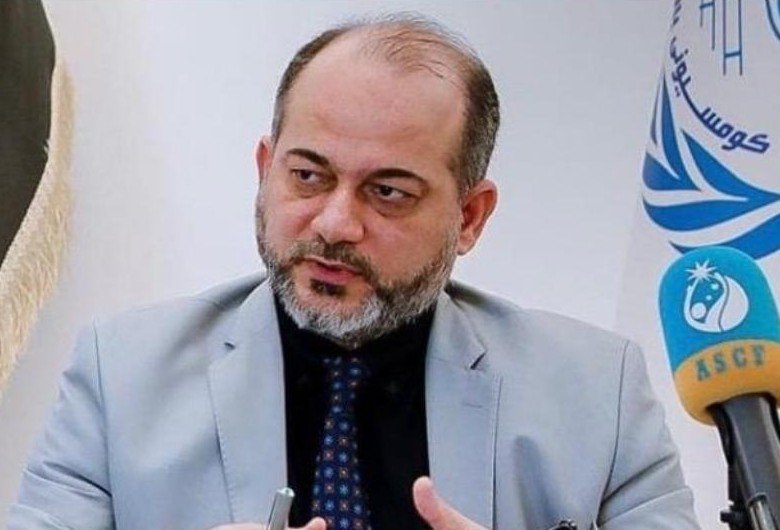
Ali Akram al-Bayati, a physician and former IHCHR Commissioner, was placed under investigation for defamation in 2022 for documenting torture claims while serving Iraq's national human rights institution. The case was closed in 2022, and he left Iraq fearing reprisals.
- Country
- Iraq
- Role
- Doctor / health worker
- Arrested
- 6 Feb 2022
- Status
- Pre-trial · no verdict
- Status
- At liberty
- Arrested
- 6 Feb 2022
- Judicial status
- Case dropped
- Name in Arabic
- علي أكرم البياتي
- Charges
- Defamation under Article 434 of the Iraqi Penal Code
Transnational repression
The defender or their family is targeted across borders. This is a case file in HuMENA's transnational repression archive.
The arrest, and what followed.
Background and Work
Ali Akram al-Bayati is a physician and human rights defender who served as a Commissioner on the Iraqi High Commission for Human Rights (IHCHR), Iraq's national human rights institution. His tenure coincided with one of the most volatile periods in recent Iraqi history: the mass protests that erupted in October 2019, when hundreds of thousands of Iraqis took to the streets to demand political reform, an end to corruption, and accountability for decades of violence and impunity.
As part of his mandate, al-Bayati documented human rights violations by both state and non-state actors. He investigated reports of excessive force, arbitrary detention, torture, and enforced disappearances during the government's crackdown on the protests. His work frequently made him the sole public source of information on violations occurring in detention facilities and at protest sites across the country. He advocated for transparency, accountability, and the protection of fundamental rights in an environment where such advocacy carried significant personal risk.
The Television Appearance
On 6 December 2020, while still serving as a Commissioner, al-Bayati appeared on Al Ahad TV. He discussed the IHCHR's efforts to investigate allegations of torture by families of individuals detained under orders of the Anti-Corruption Committee, a body formed earlier that year by Prime Minister Mustafa al-Kadhimi. Al-Bayati stated publicly that the Committee had denied the IHCHR's request to visit detention centers where the alleged torture had occurred.
The statements were made in his official capacity, within the scope of the IHCHR's statutory mandate to document torture and ill-treatment. No additional evidence of defamation was presented in the subsequent investigation file. The documentation of torture allegations and the reporting of institutional obstruction were core functions of his role.
The Defamation Charge
On 3 February 2022, more than a year after the television appearance, al-Bayati received a document from the Al Resafa Investigative Court in Baghdad. He was informed that he was under investigation for defamation under Article 434 of the Iraqi Penal Code, a provision carrying a prison sentence of up to one year. The document did not specify the basis of the accusation. The complaint had been filed by the Council of Ministers Secretariat (COMSEC).
Three days later, on 6 February 2022, al-Bayati appeared before the court. It was then that he learned the investigation concerned his statements on Al Ahad TV fourteen months earlier. The complaint originated from the Anti-Corruption Committee itself, the institution whose practices he had described on television. By the time the case was filed, al-Bayati's term as Commissioner had ended. The immunity he enjoyed during his mandate no longer applied, leaving him vulnerable to prosecution for work carried out in an official capacity.
He was held in custody and released on bail on 7 February 2022. The date of the next hearing was not disclosed.
Context and Prior Threats
The defamation case is not the first act of intimidation al-Bayati has faced. During the period when the IHCHR was actively documenting the authorities' violent response to the October 2019 protests, he received multiple threats warning him to cease the Commission's investigations. The threats targeted his work exposing killings, injuries, and arbitrary detentions of protesters by security forces and unidentified armed groups.
Article 434 of the Iraqi Penal Code is routinely deployed against dissidents, journalists, and human rights defenders. The provision's vague language and the threat of imprisonment create a chilling effect on public discourse and accountability work. The case against al-Bayati sends a clear message to current and future members of Iraq's national human rights institution: documentation of state abuses, even when conducted within an official mandate, may result in prosecution once institutional protections lapse.
Legal Proceedings
In March 2022 the case remained open and the court had not announced a trial schedule. On 9 May 2022 the UN Committee against Torture described the prosecution as discontinued, and on 27 June 2022 Iraq told UN Special Procedures that the Prime Minister had decided not to appeal the investigating judge's decision and that the case was closed. Fearing reprisals, al-Bayati left Iraq.