Yahya
Shurbaji
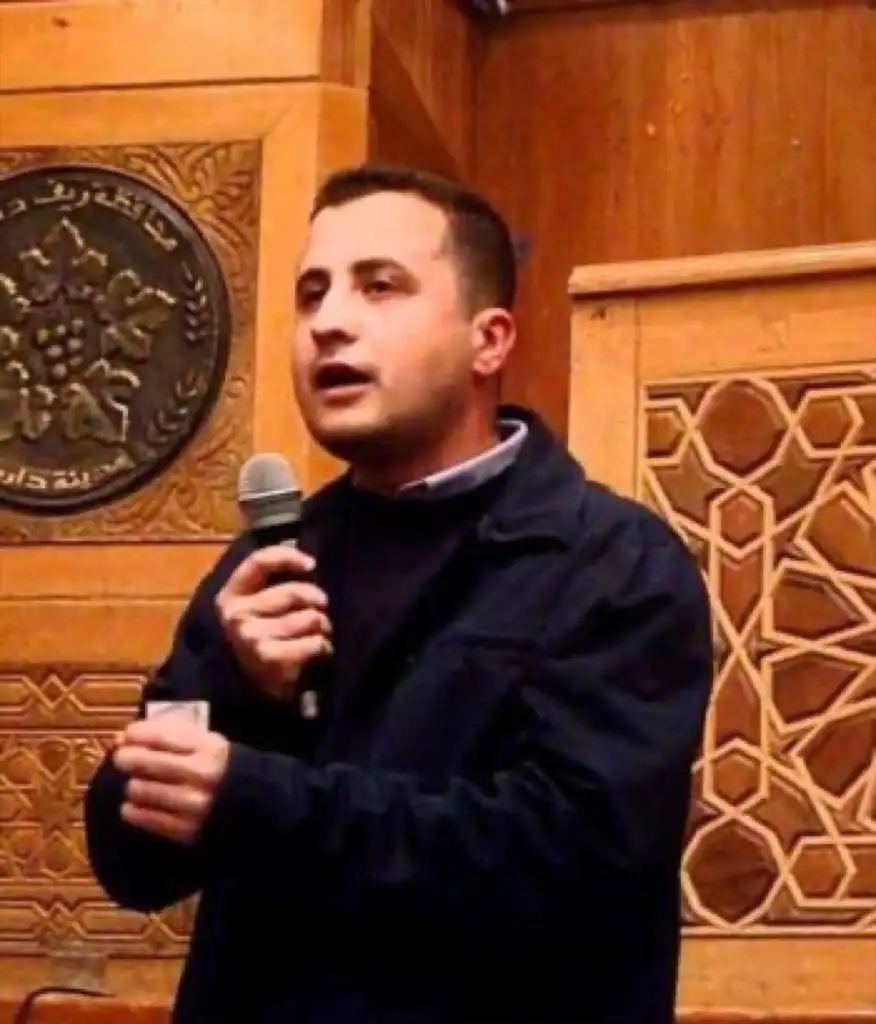
Yahya Shurbaji was a civic activist from Daraya who organised peaceful protests and was arrested on 6 September 2011 with his brother Ma'an. His family learned from the civil registry in July 2018 that he had died in custody, with his death recorded on 15 January 2013.
- Country
- Syria
- Arrested
- 8 Sep 2011
- Status
- Died in custody
- Arrested
- 8 Sep 2011
- Name in Arabic
- يحيى شربجي
The arrest, and what followed.
Update, 12 November 2026: Yahya Shurbaji died in the custody of the Syrian authorities; civil registry records list his death on 15 January 2013, and his family learned of it in July 2018. No public report was found of his remains being returned or of anyone being held to account.
Background and Work
Yahya Shurbaji was a civic activist from Daraya, a suburb south-west of Damascus, and a member of the circle of young people from the town known for advocating nonviolent change through civic action. His activism began long before 2011. In May 2003, army intelligence officers arrested him with several other young men from Daraya, among them Tarek Shurbaji and Abdel Akram al-Sakka, after the group started a local programme urging civil servants to refuse bribes and residents to stop smoking. A military court sentenced the men to three or four years' imprisonment without a right of appeal.
When protests began in Syria in March 2011, he helped organise peaceful demonstrations in Daraya. Amnesty International described him as being at particular risk because of this role. Protesters in Daraya became known for carrying flowers in response to the violence of the security forces, a practice associated with Ghiath Matar, who was arrested with him.
The Arrest
On 6 September 2011, plain-clothes officers arrested Yahya Shurbaji in Daraya. According to Amnesty International, he was detained after his brother, Ma'an Shurbaji, telephoned to say he had been injured in a raid on his home; Amnesty's sources said Ma'an was already in custody and had been forced to make the call. Ghiath Matar was arrested the same day. Amnesty reported that the detainees were held incommunicado, reportedly by Air Force Intelligence, and were at serious risk of torture.
Within days, Ghiath Matar's body was returned to his family. Amnesty International said video and other evidence suggested he had been tortured before his death, although officials told the family he had been shot by armed gangs.
Detention Conditions and Health
The authorities never told the family where Yahya Shurbaji was held. Later reporting by The Intercept said he died while held in Saydnaya Military Prison, north of Damascus. Civil registry records obtained by the family give his date of death as 15 January 2013, and that of his brother Ma'an as 13 December 2013. No cause of death was disclosed.
The Case
There was no known trial or charge in connection with his 2011 arrest. For almost seven years his family received no official information. On 23 July 2018, while checking the civil registry on the advice of lawyers and activists, they found both brothers recorded as dead. His sister, Bayan Shurbaji, told Al-Araby Al-Jadeed that the family had been approached several times by people offering information about the brothers in exchange for money. The family left Daraya more than a year after the arrests.
International Response
In Opinion No. 6/2004, adopted on 26 May 2004, the UN Working Group on Arbitrary Detention found his 2003 detention and that of ten other men from Daraya arbitrary, in breach of articles 9, 14, 19 and 21 of the International Covenant on Civil and Political Rights. In September 2011, Amnesty International issued an urgent action and a public statement on his arrest. On 26 July 2018, Amnesty named Yahya and Ma'an Shurbaji, together with Islam Dabbas, another activist from Daraya, among at least 161 forcibly disappeared people whose deaths had been confirmed in civil registry records, and called on the Syrian government to return their remains and disclose the circumstances of their deaths.
Following the change of government in Syria in December 2024, the Syrian state news agency SANA reported in February 2026 that a community library and cultural centre bearing his name had opened in Daraya.