
Waleed
Abu al-Khair
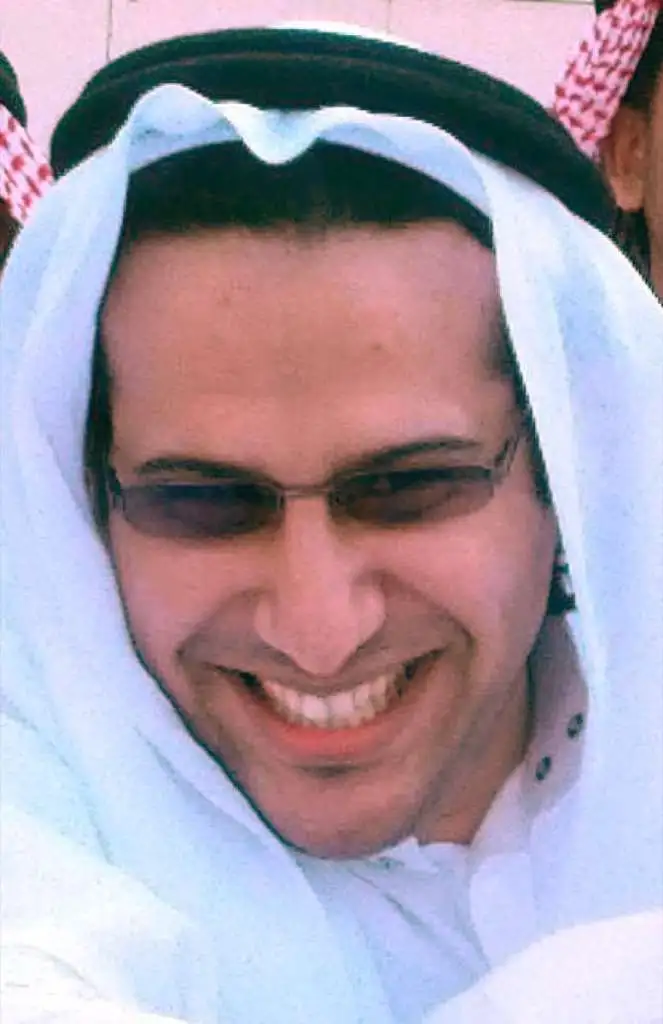
Waleed Abu al-Khair is a Saudi lawyer and the founder of the Monitor of Human Rights in Saudi Arabia, who was arrested in April 2014 and sentenced by the Specialised Criminal Court to 15 years in prison followed by a 15-year travel ban. He remains detained in Dhahban Prison in Jeddah, where rights groups report solitary confinement, assaults and denial of medical care.
- Country
- Saudi Arabia
- Role
- Lawyer
- Arrested
- 15 Apr 2014
- Sentence
- 15 years' imprisonment, five of them initially suspended, a 15-year travel ban after release, a fine of 200,000 Saudi riyals and closure of websites linked to him (6 July 2014; the appeal court ruled on 12 January 2015 that he must serve the full 15 years).
- Status
- Imprisoned (serving sentence)
- Arrested
- 15 Apr 2014
- Sentence
- 15 years' imprisonment, five of them initially suspended, a 15-year travel ban after release, a fine of 200,000 Saudi riyals and closure of websites linked to him (6 July 2014; the appeal court ruled on 12 January 2015 that he must serve the full 15 years).
- Judicial status
- Convicted, not final
- Restrictions
- Hunger strike ongoing
- Name in Arabic
- وليد أبو الخير
- Charges
- Contempt of court
- Criticising the system of absolute monarchy and calling for a constitutional monarchy
- Inciting public opinion
- Communicating with foreign entities
- Using the media to smear the country's reputation
- Inciting international organisations against Saudi Arabia with the intent of ruining its reputation
- Setting up and supervising an unlicensed association
The arrest, and what followed.
Update, 12 November 2026: Waleed Abu al-Khair remains imprisoned in Dhahban Prison in Jeddah, more than twelve years into a 15-year sentence that is to be followed by a 15-year travel ban. The most recent public report on his situation, from SANAD in April 2026, describes solitary confinement and denial of medical care.
Background and Work
Waleed Abu al-Khair, born in 1979 and based in Jeddah, is a Saudi lawyer who founded the Monitor of Human Rights in Saudi Arabia. The authorities refused to license the organisation, which was registered in Ontario, Canada, and the Justice Ministry refused to license him as a lawyer. He represented many victims of abuses, including the blogger Raif Badawi and the women's rights defender Samar Badawi, who was then his wife, as well as members of the Saudi Civil and Political Rights Association (ACPRA). He also hosted a weekly discussion group for reformists in his home.
His work has been recognised with the Olof Palme Prize in 2012, the Ludovic Trarieux International Human Rights Prize in 2015, the Law Society of Upper Canada Human Rights Award in 2016, the Right Livelihood Award in 2018, shared with Mohammed Fahd Al-Qahtani and Abdullah al-Hamid, the PEN Pinter Prize for an International Writer of Courage in 2018, the American Bar Association International Human Rights Award in 2019, the Geuzenpenning of Amnesty Netherlands in 2020, shared with Mohammed Fahd Al-Qahtani, Abdullah al-Hamid and Mohammed al-Bejadi, and the Anna Dahlbäck Memorial Fund award in 2024.
The Arrest
In October 2013 a criminal court in Jeddah sentenced him to three months in prison for offending the judiciary, mainly for signing a 2011 statement criticising the treatment of 16 reformists; the Court of Appeal in Mecca upheld the ruling on 6 February 2014. In the same month, October 2013, a separate trial opened before the Specialised Criminal Court in Riyadh, a court created for terrorism cases. On 15 April 2014, at the fifth session of that trial, he was arrested after refusing to sign a pledge to give up his activism, under a detention order issued by the Minister of Interior under the new Counter-Terrorism Law. He was taken to al-Ha'ir Prison and placed in solitary confinement, and according to a 2025 joint statement his family and lawyers were not told of his arrest for 24 hours and he was held incommunicado for two to three months.
Detention Conditions and Health
He has been moved at least five times, from al-Ha'ir Prison in Riyadh to Briman Prison and then Dhahban Prison in Jeddah. In 2016 he went on hunger strike to demand adequate food, medical check-ups and reading material. On 26 November 2019 he was moved to a high-security wing of Dhahban, where he reported long exposure to the sun and the removal of his mattress and books; he went on hunger strike on 29 November and again from 11 December 2019 until 6 February 2020. ALQST reports that in October 2022 he was prevented from taking his medication, that in January 2024 he was beaten by another inmate, and that on 12 March 2024 he was refused a hospital transfer he needed. SANAD reports that in February 2023 a prison officer encouraged other inmates to attack him, after which he went on hunger strike and was put in solitary confinement. Rights groups also report sleep deprivation, restricted visits and denial of adequate food.
Legal Proceedings
On 6 July 2014 the Specialised Criminal Court sentenced him to 15 years in prison, five of them suspended, a 15-year travel ban after release, a fine of 200,000 Saudi riyals and the closure of his websites. The charges included seeking to undermine the state and its officials, inciting public opinion, insulting the judiciary, inciting international organisations against the kingdom, founding an unlicensed organisation and violating the anti-cybercrime law. He refused to recognise the court and did not respond to the charges. On 12 January 2015 the appeal court ruled that he must serve the full 15 years because he refused to apologise; FIDH dates the appeal ruling to 15 February 2015. Counted from April 2014, the prison term would end in 2029.
International Response
The UN Working Group on Arbitrary Detention found his detention arbitrary at its September 2015 session, in an opinion that also covered Mohammed Fahd Al-Qahtani, Abdullah al-Hamid, Raif Badawi and Mohammed al-Bejadi, and again in 2018, each time calling for his immediate release and reparation. On 15 April 2024, the tenth anniversary of his arrest, 17 organisations including Human Rights Watch, ALQST, MENA Rights Group, GCHR, FIDH and OMCT called for his release. ALQST, Right Livelihood and three lawyers' and academic bodies renewed the call on 6 July 2025, and SANAD marked twelve years of his detention on 15 April 2026. Amnesty International has considered him a prisoner of conscience since 2013.