
Saad
Bouakba
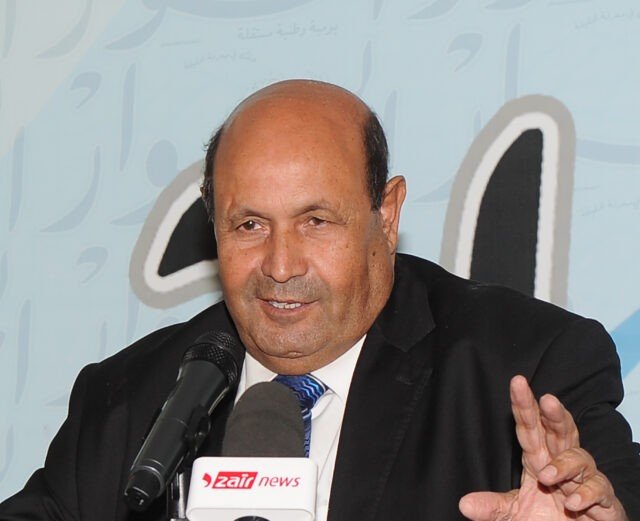
Saad Bouakba is a journalist and author. He was jailed in November 2025 after discussing historical allegations about Algeria's first president in a YouTube interview, then sentenced under defamation and false-news laws. He was released in December 2025 after a suspended sentence, and in July 2026 an appeal court upheld the conviction and reduced the term to 18 months, suspended.
- Country
- Algeria
- Role
- Journalist
- Arrested
- 27 Nov 2025
- Sentence
- Three years in prison, suspended, and a fine of DZD 1,000,000 (Bir Mourad Raïs Court, 4 December 2025); reduced on appeal on 7 July 2026 to 18 months suspended, fine confirmed.
- Status
- At liberty
- Arrested
- 27 Nov 2025
- Sentence
- Three years in prison, suspended, and a fine of DZD 1,000,000 (Bir Mourad Raïs Court, 4 December 2025); reduced on appeal on 7 July 2026 to 18 months suspended, fine confirmed.
- Judicial status
- Convicted, not final
- Name in Arabic
- سعد بوعقبة
- Charges
- Insulting and defaming symbols of the National Liberation Revolution
- Intentionally publishing false information online
The arrest, and what followed.
Background and Work
Saad Bouakba is a journalist and author whose reporting centres on Algeria's political history and contemporary governance. He has written extensively on the National Liberation Front (FLN), the movement that led Algeria's independence struggle between 1954 and 1962 and remained the dominant political force for decades after. His work examines contested narratives around the revolution, post-independence leadership, and the distribution of state resources.
Bouakba publishes across online platforms and traditional print outlets. He has given interviews to independent media channels, including YouTube-based programmes that operate outside Algeria's tightly controlled state broadcasting system. His commentary often draws on archival research and testimony from veterans and family members of historical figures.
The Arrest
On 27 November 2025, Bouakba was arrested in Algiers and placed in pre-trial detention. A prosecutor at the Bir Mourad Raïs Court charged him with insulting and defaming symbols of the National Liberation Revolution and with intentionally publishing false information online. The charges followed a complaint filed by Mahdia Ben Bella, daughter of Algeria's first president, Ahmed Ben Bella.
The complaint related to an interview Bouakba had given to Vision TV News, a YouTube channel. In the interview he discussed allegations that the late president had distributed funds belonging to the FLN in ways that contravened party rules. Such historical claims touch on deeply sensitive questions of legitimacy and patrimony in Algerian political culture.
Legal Proceedings
A hearing was scheduled for 4 December 2025. On that date, the Bir Mourad Raïs Court issued a sentence. The court imposed a three-year suspended prison sentence and a fine of DZD 1,000,000, and he was released the same day. On 7 July 2026 the Algiers appeal court upheld the conviction and reduced the sentence to 18 months, suspended, confirming the fine.
The statutes invoked against Bouakba are framed in broad terms. The offence of insulting symbols of the revolution has been applied in numerous cases against journalists, historians, and political commentators who question official narratives about the independence struggle or its leaders. The false-news provision, introduced in amendments to Algeria's penal code, has been widely criticised by press-freedom organisations for its vague wording and its use to criminalise investigative reporting.
Previous Legal Harassment
Bouakba has faced repeated legal proceedings linked to his journalism. In February 2023, he was briefly detained over a satirical column published by the Al Madar website and charged with inciting hatred and distributing publications deemed harmful to the national interest. He was placed under judicial supervision and his passport was confiscated.
On 18 October 2023, the Dar El Beida court convicted him in that case and sentenced him to one year in prison, six months of it suspended, and a fine of DZD 200,000. The column criticised government officials and used irony to highlight perceived hypocrisy in public discourse. In 2024 the Algiers Court of Appeal overturned the prison term and replaced it with a fine of DZD 20,000.
Implications for Press Freedom
Bouakba's case illustrates the extent to which Algerian authorities deploy criminal-defamation and insult laws to suppress critical journalism. The use of pre-trial detention in a case involving purely expressive conduct contravenes international standards, which reserve such measures for situations where there is a demonstrable risk of flight or evidence tampering.
The swift progression from arrest to sentencing, within one week, raises serious concerns about the fairness of the proceedings. Legal observers note that such timelines leave little opportunity for the defence to prepare, gather evidence, or challenge the factual basis of the charges. The chilling effect on other journalists and historians is immediate: discussing Algeria's revolutionary past and its leaders has become legally perilous.