
Khalil
Maatouk
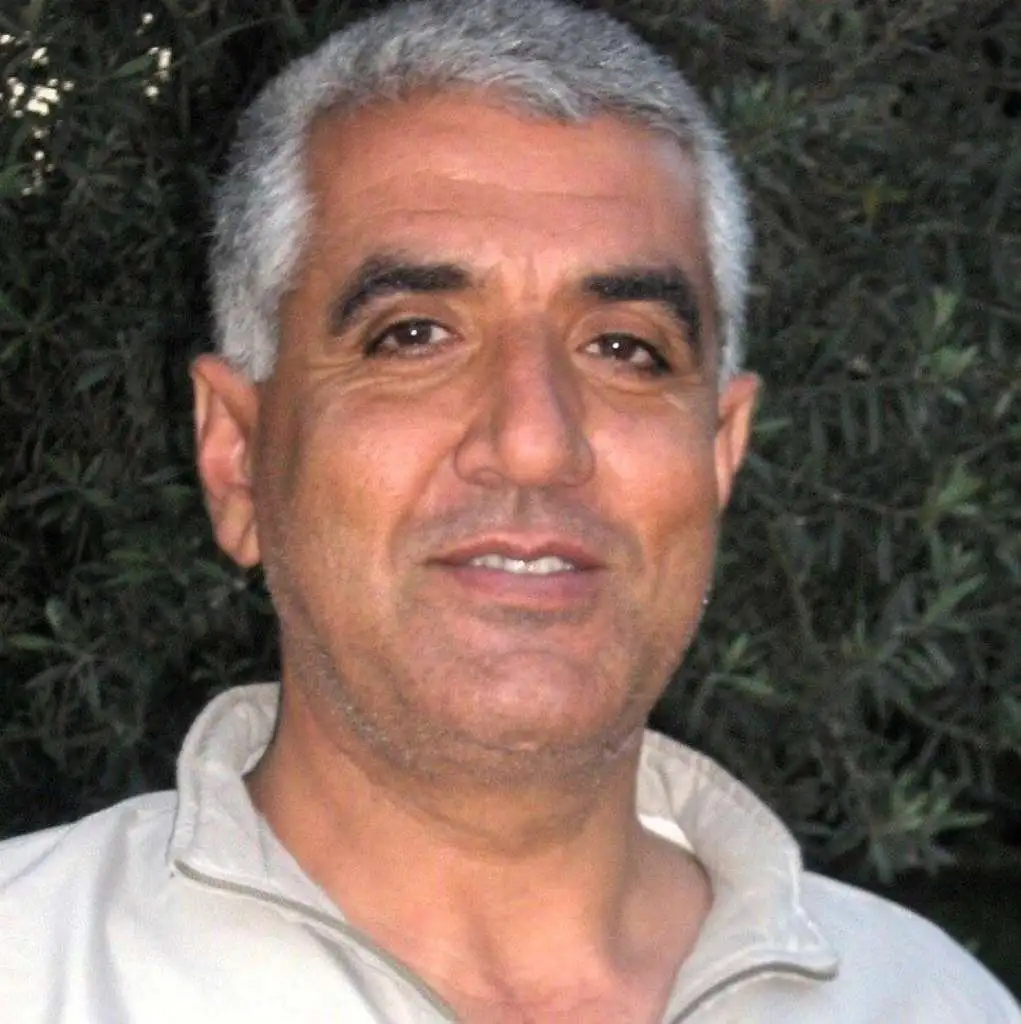
Khalil Maatouk is a Syrian human rights lawyer and director of the Syrian Center for Legal Studies and Research who defended political prisoners for more than 20 years, and who disappeared on his way to his Damascus office on 2 October 2012. On 31 October 2025 his family announced his death; its date, place and circumstances have not been made public.
- Country
- Syria
- Role
- Lawyer
- Arrested
- 2 Oct 2012
- Status
- Died in custody
- Arrested
- 2 Oct 2012
- Restrictions
- Travel ban
- Name in Arabic
- خليل معتوق
The arrest, and what followed.
Update, 12 November 2026: Khalil Maatouk disappeared on 2 October 2012 on his way to his office in Damascus, on a road lined with government checkpoints. On 31 October 2025 his family announced his death; the date, place and circumstances have not been made public, and no official account has been reported.
Background and Work
Khalil Maatouk is a Syrian human rights lawyer. He was executive director of the Syrian Center for Legal Studies and Research and head of the Syrian Center for the Defence of Detainees. For more than 20 years he defended peaceful activists and political prisoners, representing hundreds of prisoners of conscience before military, state security and civil courts, and he co-authored texts on justice and fundamental freedoms. Among his clients was Mazen Darwish, director of the Syrian Center for Media and Freedom of Expression, which lists him among its missing members. He publicly criticised practices that denied his clients a fair trial.
His work brought him under pressure from the authorities. He was banned from travelling from 2005 to 2011 because of his advocacy for prisoners of conscience, and a lawyer working on his case said he had been summoned to various security branches because of his work. In 2015, while he was missing, he was shortlisted for the Lawyers for Lawyers Award.
The Disappearance
On the morning of 2 October 2012, Khalil Maatouk, then 53, left his home in Sahnaya, a suburb of Damascus, for his office in the capital. His health prevented him from travelling alone, and he was driven by his colleague and friend Mohamed Zaza (also reported as Mohammed Thatha). The journey normally takes about 15 minutes and passes several checkpoints run by different security branches. Neither man arrived, and both phones stopped working. His family and colleagues believed that security forces had detained them.
In February 2013, after an official inquiry by fellow lawyers, the authorities denied holding him, and they did not answer the family's repeated requests for information. Unofficial sources reported seeing him at State Security Branch 285 in Kafr Sousa, at an Air Force Intelligence branch in Damascus and, in September 2013, at Military Intelligence's Palestine Branch 235. A Syrian lawyer who looked into the case told the Syrian Center for Media and Freedom of Expression that he was held in a Political Security facility in Damascus, and people released from detention in 2015 told his family that they had seen him in several government facilities. The former government continued to deny any involvement.
Detention Conditions and Health
Khalil Maatouk has advanced lung disease that requires medication, regular injections in hospital and medical supervision. Amnesty International raised particular concern about his condition the day after his disappearance, and the Gulf Centre for Human Rights reports that he was denied the treatment he needed while in detention.
Reprisals Against His Family
His daughter, the artist Raneem Maatouk, was arrested on 17 February 2014 at the family home in Sahnaya. She was held for four months and released on 11 June 2014, after which the family left Syria. Relatives told Amnesty International that his disappearance left the family without his protection and facing a hostile environment.
The Announcement of His Death
On 31 October 2025, Raneem Maatouk announced on Facebook, on behalf of her mother and brother, the death of her father. Her statement referred to his final moments before his execution. The family did not make public the date, place or circumstances of his death, and no official account has been reported. Funeral ceremonies were announced for Syria and for Leipzig, Germany. The fate of Mohamed Zaza has not been reported.
International Response
Amnesty International, Human Rights Watch, the Gulf Centre for Human Rights, the Cairo Institute for Human Rights Studies and Lawyers for Lawyers campaigned for his release over many years, and his case was featured in Amnesty International's campaign on the tens of thousands of people disappeared in Syria. After the family's announcement, the Gulf Centre for Human Rights said that the current Syrian government bears full responsibility for finding out the whole truth about what happened to him, and for identifying those responsible and bringing them to justice.