
Ezzat
Ghoneim
Ezzat Ghoneim, a lawyer who led one of Egypt's most active human rights groups documenting disappearances, was himself disappeared in 2018, then prosecuted on terrorism-related charges before an emergency court.
- Country
- Egypt
- Role
- Lawyer
- Arrested
- 13 Sep 2018
- Sentence
- Fifteen years in prison (Emergency State Security Court, 5 March 2023, case 1552/2018); not open to appeal.
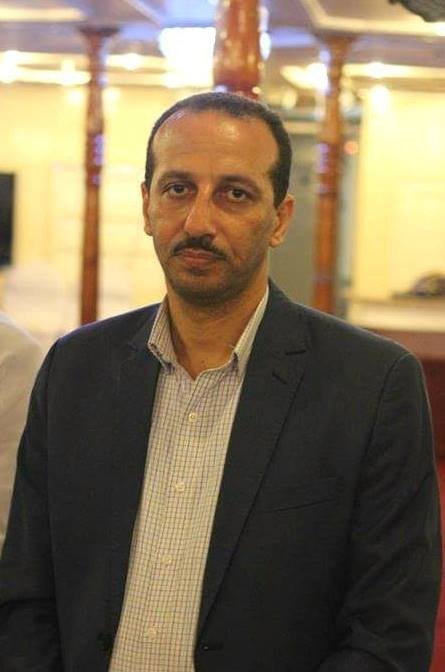
- Status
- Imprisoned (serving sentence)
- Arrested
- 13 Sep 2018
- Sentence
- Fifteen years in prison (Emergency State Security Court, 5 March 2023, case 1552/2018); not open to appeal.
- Judicial status
- Convicted, final
- Name in Arabic
- عزت غنيم
- Charges
- Affiliation with a terrorist organisation
- Providing financial support to a terrorist organisation
- Distributing materials in furtherance of a terrorist group
- Using social media to spread false information
- Inciting citizens to commit terrorist acts
- Defamation
- Joining an illegal group
The cases, as we document them.
Where a case was replaced by a new one, the two are linked.
- Case1552/2018
Defendant
Supreme State Security Prosecution
Also named in this case: Hoda Abdel-Moneim, Tarek Al-Selkawi
The arrest, and what followed.
Background and Work
Ezzat Ghoneim is a human rights lawyer whose practice centred on the right to a fair trial and the documentation of enforced disappearances. In 2014, he took the helm of the Egyptian Coordination for Rights and Freedoms, an organisation that rapidly became one of Egypt's most visible legal-defence groups during a period of sweeping crackdowns on dissent.
ECRF provided legal representation to detainees, tracked cases of arbitrary arrest and disappearance, and published reports on torture, medical negligence, and due-process violations inside Egypt's sprawling detention system. The organisation's work brought it into direct confrontation with State Security, which regards independent human rights monitoring as a threat to national security.
Arrest and Enforced Disappearance
On 1 March 2018, State Security officers detained Ezzat Ghoneim in Cairo, and he was added to State Security case no. 441/2018 on charges of spreading false news and joining a banned group. He was held pending investigation, and prosecutors renewed his detention at intervals over the following months. On 4 September 2018, the Giza Criminal Court ordered his release with precautionary measures.
The police station in Al Haram, where he was held, refused to execute the release order. Officers told his family they were awaiting instructions from the National Security Agency. On 13 September 2018, ten days after the court order, police informed his wife that Ezzat had been released. He did not come home. His family had no information about his location, and the authorities denied any role in his disappearance.
Ezzat Ghoneim remained disappeared for nearly five months. On 9 February 2019, he reappeared and a judge ordered his pre-trial detention. The pattern, judicial release followed by re-detention or disappearance, had by that time become a documented tactic used against lawyers, journalists, and activists in Egypt.
Prolonged Pre-Trial Detention and Charges
His detention at first continued in case no. 441/2018. In July 2019, after his release was ordered in that case, he was added to a new case, no. 1118/2019, on a charge of joining a terrorist group, and in 2021 he was investigated in case no. 1552/2018, the case against ECRF. Prosecutors renewed his detention every 45 days, a practice that Egyptian law permits for up to two years but which is frequently extended through the opening of new investigations.
He faced initial charges of defamation and joining an illegal group. In May 2019, the State Security Prosecutor renewed his detention for an additional 15 days pending further investigation. The charges evolved over time. On 23 August 2021, the State Security Prosecutor referred him to trial before the Emergency State Security Criminal Court on charges of affiliation with a terrorist organisation, providing financial support to that organisation, distributing materials in furtherance of its aims, and using ECRF's social media accounts to spread false information and incite citizens to commit terrorist acts.
Detention Conditions
The prison where Ezzat Ghoneim is held now is not publicly confirmed. Conditions in Egyptian prisons, particularly for those held on political or security-related charges, are marked by overcrowding, restricted family visits, and limited access to medical care. Information about Ezzat's health and treatment inside the facility remains sparse, a common feature of cases involving State Security prosecutions.
Legal Proceedings
The referral to an Emergency State Security Criminal Court represents a significant escalation. Egypt reactivated its emergency courts in 2017, granting them jurisdiction over a broad range of offences deemed to threaten national security. Verdicts issued by these courts are final and cannot be appealed, except through a process of ratification by the president, who has the discretion to confirm, reduce, or annul sentences.
The charges against Ezzat Ghoneim criminalise his human rights work under the rubric of terrorism. The allegation that ECRF's social media activity constitutes incitement reflects a broader legal strategy in which documentation and advocacy are reframed as support for proscribed groups. The case has been described by observers as emblematic of the systematic targeting of Egypt's remaining independent human rights infrastructure.
International and Regional Response
Human rights organisations in Egypt and internationally have called for Ezzat Ghoneim's release, citing the arbitrary nature of his detention, the due-process violations throughout his case, and the use of terrorism charges to silence legitimate human rights work. His prolonged pre-trial detention, the enforced disappearance that preceded his reappearance in court, and the referral to an emergency tribunal all constitute serious breaches of international fair-trial standards.
On 5 March 2023 the Emergency State Security Court sentenced him to 15 years in prison, together with 28 other defendants convicted in the case, and all of them were placed on Egypt's terrorist list. The verdict cannot be appealed; only the president can confirm, reduce or annul it. His detention has had a chilling effect on the wider community of Egyptian human rights lawyers, many of whom have faced similar patterns of arrest, disappearance, and prosecution.