
Ahmed
Mansoor
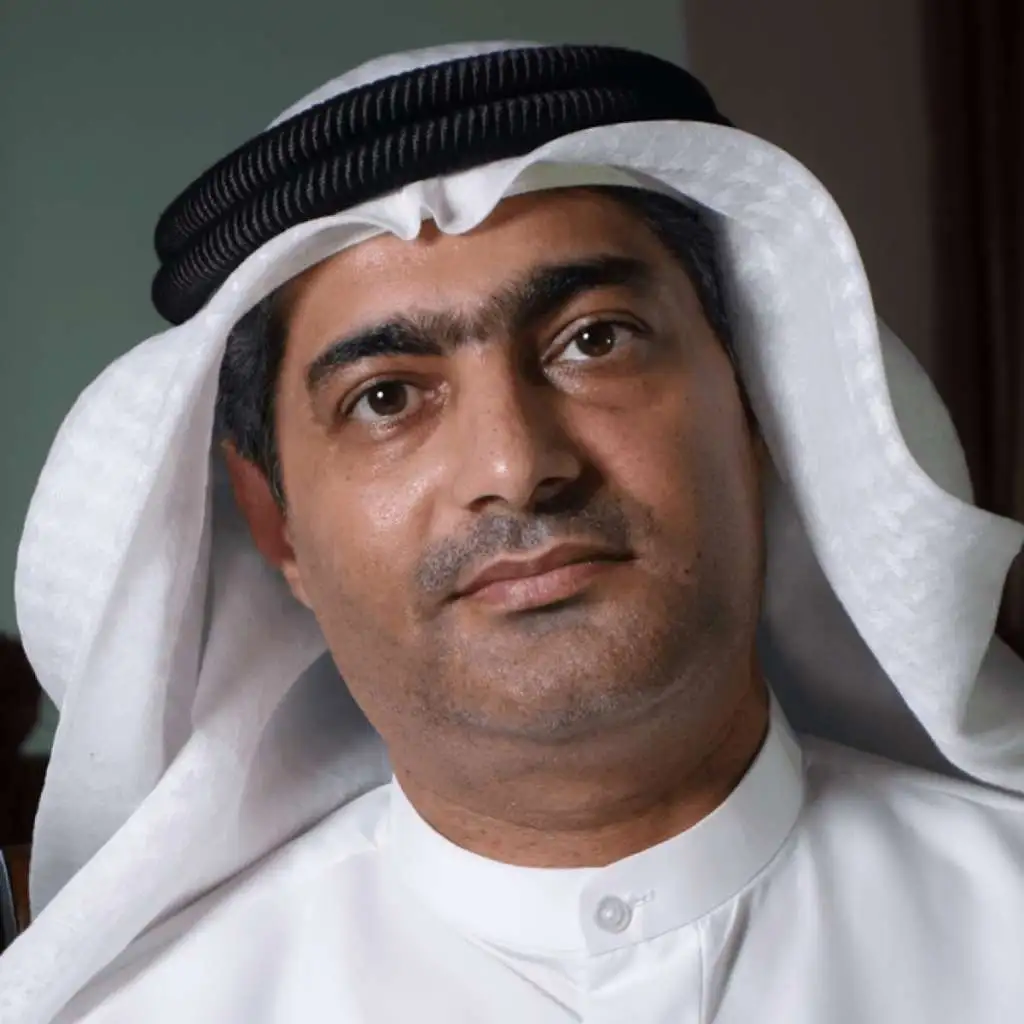
Ahmed Mansoor is an Emirati engineer, poet and human rights defender, and the 2015 laureate of the Martin Ennals Award, who has been detained since March 2017. He is serving a 10-year sentence imposed in 2018 and a further 15-year sentence from the UAE84 mass trial, upheld in March 2025, and is held in solitary confinement in al-Sadr Prison in Abu Dhabi.
- Country
- United Arab Emirates
- Role
- Blogger / online writer
- Arrested
- 20 Mar 2017
- Sentence
- 10 years' imprisonment, a fine of 1,000,000 dirhams and three years' probation (29 May 2018, upheld on 31 December 2018), followed by a further 15 years' imprisonment in the UAE84 case (10 July 2024, upheld on 4 March 2025).
- Status
- Imprisoned (serving sentence)
- Arrested
- 20 Mar 2017
- Sentence
- 10 years' imprisonment, a fine of 1,000,000 dirhams and three years' probation (29 May 2018, upheld on 31 December 2018), followed by a further 15 years' imprisonment in the UAE84 case (10 July 2024, upheld on 4 March 2025).
- Judicial status
- Convicted, not final
- Restrictions
- Hunger strike ongoing
- Name in Arabic
- أحمد منصور
- Charges
- Spreading false news to harm the reputation of the state, and insulting the status and prestige of the UAE and its symbols, including its leaders (2018 case, Cybercrime Law)
- Cooperating with a terrorist organisation and supporting it through social media posts (UAE84 case)
The arrest, and what followed.
Update, 12 November 2026: Ahmed Mansoor remains in solitary confinement in al-Sadr Prison in Abu Dhabi, serving a 10-year sentence from 2018 and a further 15-year sentence from the UAE84 mass trial, upheld in March 2025. The most recent public report on his situation dates from April 2026.
Background and Work
Ahmed Mansoor, born in 1969, is an Emirati telecommunications engineer and poet who studied at the University of Colorado Boulder and began human rights work in 2006. He documented arbitrary detention, torture, unfair trials and the situation of stateless people (Bidoon) in the Gulf, and in 2009 he helped lead opposition to a draft media law that was later suspended. He sits on the advisory committee of the Middle East and North Africa Division of Human Rights Watch and on the advisory board of the Gulf Centre for Human Rights. He attended the 2008 to 2009 UN Universal Periodic Review of the United Arab Emirates, the only Emirati outside the official delegation to do so.
In March 2011 he launched a petition with others calling for an elected parliament. In April 2011 he was arrested and tried with Dr. Nasser bin Ghaith, Fahad Salim Dalk, Ahmed Abdul-Khaleq and Hassan Ali al-Khamis in the case known as the UAE Five. On 27 November 2011 the Federal Supreme Court sentenced him to three years for publicly insulting the country's leaders; the five were released the next day when the President commuted their sentences. The UN Working Group on Arbitrary Detention had found his detention arbitrary in Opinion No. 64/2011. His passport was never returned. In August 2016 the Citizen Lab identified a spyware attack against his phone, and in 2015 he received the Martin Ennals Award for Human Rights Defenders, which he accepted by video link because he could not travel.
The Arrest
Just before midnight on 20 March 2017, uniformed security officers raided his home in Ajman, detained him without a warrant and took his devices. The official news agency said the next day that he was accused of publishing false information. His family did not learn where he was held for more than a year. UN experts later noted that he was held in an unknown location until his first hearing on 14 March 2018 and was allegedly unable to appoint a lawyer of his choice.
Detention Conditions and Health
He has been held in an isolation ward of al-Sadr Prison near Abu Dhabi since his arrest. Human Rights Watch reported that from December 2017 he was denied eyeglasses and most hygiene items, had no reading materials, television or radio, and for a long period had no bed or mattress. He went on hunger strike from 17 March to 10 April 2019 and again from September 2019; Human Rights Watch put the second strike at 49 days, while MENA Rights Group reported that it lasted at least five months. GCHR has reported high blood pressure and general fatigue. After a letter he wrote describing his treatment was published on 16 July 2021, a source told Human Rights Watch that he was moved to a smaller and more isolated cell and denied medical care. UN experts said on 7 May 2019 that his conditions, including prolonged solitary confinement, may constitute torture. The authorities deny mistreating him and do not allow independent monitors to visit.
Legal Proceedings
On 29 May 2018 the State Security Chamber of the Abu Dhabi Court of Appeals convicted him on five charges, including spreading false news to harm the reputation of the state and insulting the status and prestige of the country and its leaders, and acquitted him of a terrorism charge. He was sentenced to 10 years in prison, a fine of 1,000,000 dirhams and three years of surveillance after release. The Federal Supreme Court upheld the ruling on 31 December 2018.
On 7 December 2023, with his first term near its end, he was brought to trial again with 83 other defendants in the UAE84 case before the Abu Dhabi Federal Court of Appeal, accused of founding a clandestine organisation called the Justice and Dignity Committee. On 10 July 2024 the court convicted 53 defendants and sentenced him to 15 years for cooperating with a terrorist organisation and supporting it through articles and tweets. Co-defendants in the same case included Nasser bin Ghaith, who also received 15 years, and Mohamed Al-Roken, Abdulsalam Al-Marzooqi and Sheikh Mohammed Al-Siddiq, who were sentenced to life imprisonment. The Federal Supreme Court rejected his appeal on procedural grounds on 4 March 2025. Both trials were closed, and the charge sheet and rulings have not been published. No public source explains how the two sentences are to run together.
International Response
Amnesty International considers him a prisoner of conscience. UN experts asked the authorities to disclose his whereabouts in March 2017, condemned his conviction in June 2018 as a possible reprisal for his engagement with UN mechanisms, and raised his conditions in May 2019 and the new charges in January 2024. The UN Secretary-General has named his case in the annual report on reprisals for cooperation with the UN in 2014, 2017, 2018, 2019, 2021, 2022, 2024 and 2025, and MENA Rights Group submitted it again in April 2026. Human Rights Watch, GCHR, MENA Rights Group and PEN International continue to call for his release and for the convictions to be quashed.