Mohamed
Tadjadit
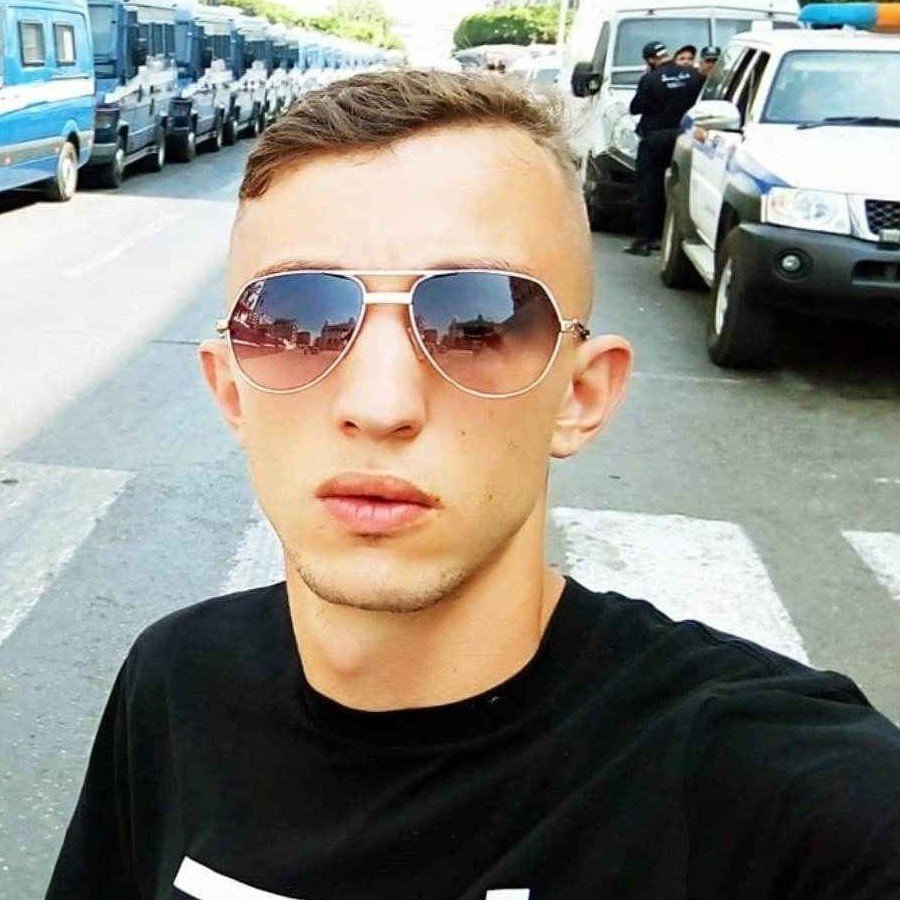
Known as the "poet of the Hirak," Mohamed Tadjadit has been arrested at least eight times since 2019. In January 2025, aged 32, he was sentenced to five years in prison, cut to one year on appeal, for Facebook and TikTok posts, including poems critical of government policy. In a second case, an appeal court sentenced him in January 2026 to three years, one of them suspended.
- Country
- Algeria
- Role
- Artist / cultural worker
- Arrested
- 16 Jan 2025
- Sentence
- Three years in prison (two years to serve, one year suspended) on appeal on 14 January 2026 in the second case. Faces a third case on charges that include one punishable by death.
- Status
- Imprisoned (serving sentence)
- Arrested
- 16 Jan 2025
- Sentence
- Three years in prison (two years to serve, one year suspended) on appeal on 14 January 2026 in the second case. Faces a third case on charges that include one punishable by death.
- Judicial status
- Convicted, not final
- Name in Arabic
- محمد تجاديت
- Charges
- Exposing publications likely to harm national interest
- Incitement to unarmed gatherings
- Apology for terrorism
- Use of information technologies to support terrorist entities
- Contempt of a public body
- Conspiracy aimed at inciting citizens against state authority and undermining national unity
- Receiving funds to undermine state security and national unity
The arrest, and what followed.
Background and Work
Mohamed Tadjadit emerged as a public figure during the Hirak movement, the sustained popular mobilization that began in February 2019 demanding political accountability, the departure of long-standing elites, and democratic governance. He became known as the "poet of the Hirak" for his verses criticizing Algeria's political and socio-economic trajectory. He shared his work on Facebook and TikTok, platforms used widely by activists to circumvent state media control.
His online activity also included private conversations with other activists and sharing testimony from individuals alleging abuse by security forces. In one instance, he circulated a 2021 video in which a minor alleged torture in police custody. Authorities later prosecuted him and four co-accused in connection with that video, sentencing them in March 2022 to two years in prison, reduced on appeal to sixteen months.
Since 2019, Algerian authorities have prosecuted Mohamed Tadjadit in at least seven separate cases. Each has been linked to his peaceful activism, his social media posts, or his participation in the Hirak movement. For nearly six years, he and his family have been subjected to close surveillance, psychological pressure, and intimidation.
The January 2025 Arrest and First Conviction
On 16 January 2025, security forces arrested Mohamed Tadjadit at his home in Algiers. He had been arrested at least eight times since 2019. Four days later, on 20 January 2025, the Rouiba Court of First Instance sentenced him to five years in prison and a fine of 200,000 Algerian dinars (approximately €1,322). The proceedings were expedited; defense counsel had insufficient time to prepare.
The conviction was based on Facebook and TikTok posts, including poems criticizing government policies, and on private online conversations with other activists. The charges invoked provisions relating to "exposing publications likely to harm national interest" and "incitement to unarmed gatherings."
On 22 May 2025, the Algiers Court of Appeal upheld the conviction but reduced the sentence to one year in prison.
The Second Case: Terrorism-Related Charges
In a separate case, Mohamed Tadjadit spent nine months in pretrial detention between January and November 2024. On 11 November 2025, the Dar El Beïda Court of First Instance tried him alone, sentencing him to five years in prison, a fine of 200,000 dinars, and 500,000 dinars (approximately €3,305) in damages.
The charges included "apology for terrorism," "use of information technologies to support terrorist entities," "incitement to an unarmed gathering," and "contempt of a public body," under Articles 87bis 4, 87bis 12, 100, and 146 of the Penal Code. All charges derived from social media content and peaceful political expression.
The terrorism provisions cited rely on a definition that includes "attempting to seize power or change the system of governance by unconstitutional means" and "undermining national unity." These formulations are vague, overly broad, and have been used systematically to prosecute dissent.
After a postponement from 17 December 2025, on 14 January 2026, the Criminal Appeals Court of Algiers reduced the sentence to three years in prison, including one year suspended. He remains detained in El Harrach prison.
The Third Case: Conspiracy and Capital Charges
Mohamed Tadjadit and twelve other activists face a third set of charges: conspiracy aimed at inciting citizens against state authority and undermining national unity, receiving funds to undermine state security, publishing content harmful to national interest, and incitement to an unarmed gathering. These charges fall under Articles 77, 78, 79, 95bis, 95bis 1, 96, and 100 of the Penal Code. The conspiracy offense is punishable by death.
Two of the co-defendants are in pretrial detention, four are already imprisoned in other cases, two are in exile, and the remainder are at liberty pending trial. The case was reclassified on 6 November 2025, and the trial was set for 30 April 2026. The case is ongoing.
One element cited by prosecutors is the 2021 video exposing testimony from a minor alleging torture in police custody. Mohamed Tadjadit and four co-accused had already been convicted in connection with that matter, with a sentence reduced on appeal to sixteen months.
Detention Conditions and Treatment
Mohamed Tadjadit is held in El Harrach prison in Algiers. Throughout his repeated arrests and detention periods, he has reportedly been subjected to psychological pressure, intimidation, and surveillance. His family has also been targeted with harassment. Such treatment may amount to cruel, inhuman, or degrading treatment under international human rights law.
Legal and Human Rights Concerns
Mohamed Tadjadit's cases raise serious concerns regarding arbitrary detention, the criminalization of peaceful expression and assembly, the use of vaguely worded terrorism and national-interest provisions to suppress dissent, and violations of fair trial rights, including expedited proceedings that limited adequate defense preparation. The multiplicity of overlapping prosecutions, some following prior pardons, amounts to sustained judicial harassment.
Algeria is a State Party to the International Covenant on Civil and Political Rights (ICCPR), which protects the rights to freedom of expression, peaceful assembly, and freedom of association under Articles 19, 21, and 22, and prohibits arbitrary detention under Article 9. The charges against Mohamed Tadjadit stem solely from the peaceful exercise of these rights.
Algeria has maintained a de facto moratorium on executions since 1993 but continues to impose death sentences following proceedings that raise fair trial concerns. The country has not ratified the Second Optional Protocol to the ICCPR aiming at the abolition of the death penalty.
Broader Context
Since the outbreak of the Hirak protests in 2019, Algerian authorities have conducted sustained repression against peaceful dissent. Activists, journalists, whistleblowers, and ordinary citizens expressing criticism of the government have faced arrest, prosecution, and imprisonment. Vaguely worded terrorism-related provisions have increasingly been used to criminalize peaceful protest and expression, undermining fundamental freedoms guaranteed under international human rights law.
Mohamed Tadjadit's repeated arrests and prosecutions illustrate a sustained pattern of targeting peaceful Hirak activists through judicial harassment, intimidation, and the misuse of criminal law. His case is emblematic of the shrinking civic space in Algeria and underscores the urgent need to safeguard fundamental freedoms.