
Naji
Fateel
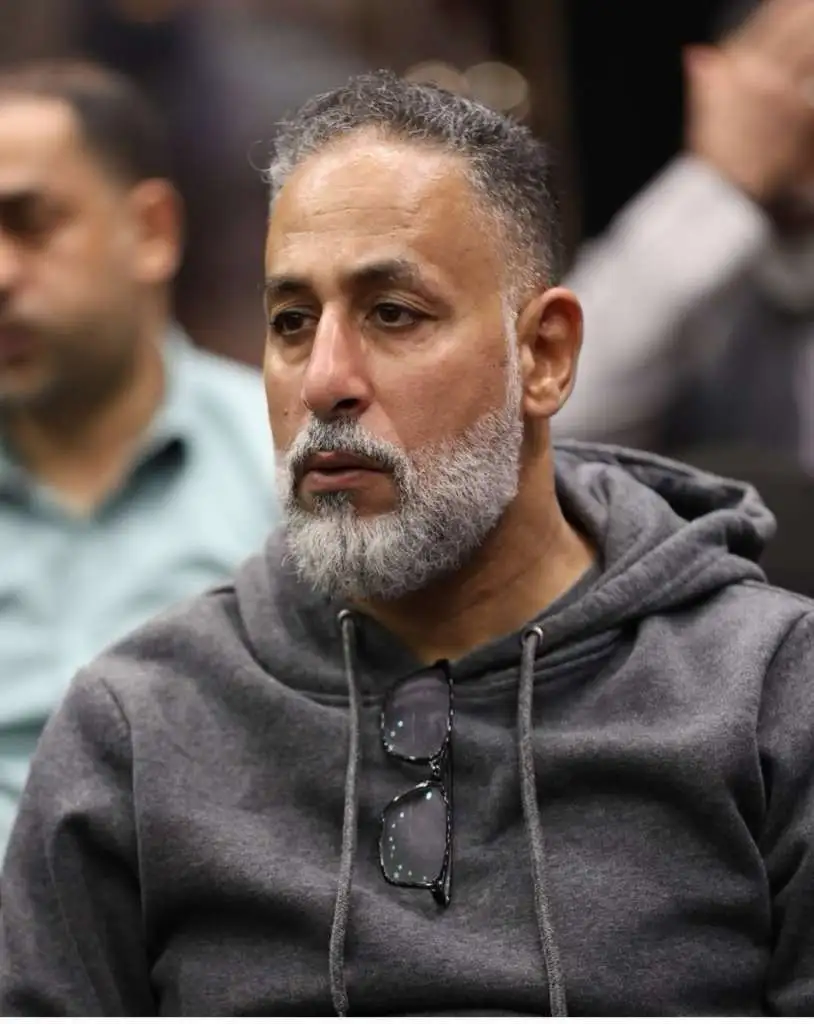
Naji Fateel is a Bahraini human rights defender and board member of the Bahrain Youth Society for Human Rights who spent more than 11 years in prison before a royal pardon in April 2024. He was re-arrested on 18 August 2026 over an unpaid share of fines from a 2016 prison protest case and is held in Jau Prison.
- Country
- Bahrain
- Role
- Blogger / online writer
- Arrested
- 18 Aug 2026
- Sentence
- Prison terms totalling 25 years and six months (2013 to 2016), ended by royal pardon on 8 April 2024; now held over his unpaid share, about US$23,700, of a collective fine imposed in the 2016 Jau Prison case.
- Status
- Detained (pretrial)
- Arrested
- 18 Aug 2026
- Sentence
- Prison terms totalling 25 years and six months (2013 to 2016), ended by royal pardon on 8 April 2024; now held over his unpaid share, about US$23,700, of a collective fine imposed in the 2016 Jau Prison case.
- Judicial status
- Convicted, not final
- Name in Arabic
- ناجي فتيل
- Charges
- Establishing a group aiming to disable the constitution, under Article 6 of the Terrorism Act (2013 case)
- Attending illegal gatherings (2013 case)
- Charges in the 2016 Jau Prison protest case, described as damaging public property, attacking police, arson and resisting authorities
The arrest, and what followed.
Update, 12 November 2026: Naji Fateel has been held in Jau Prison since August 2026, re-arrested over his unpaid share of a fine imposed in a 2016 case, although a royal pardon released him in April 2024. No hearing, settlement or release has been reported.
Background and Work
Naji Ali Hassan Fateel is a Bahraini human rights defender and a co-founder and board member of the Bahrain Youth Society for Human Rights. According to Front Line Defenders, he documented human rights violations, advocated for monitoring mechanisms and promoted freedom of expression, peaceful assembly and association. His deprivation of liberty, as considered by the UN Working Group on Arbitrary Detention, began in 2007. Human Rights Watch reported in July 2008 that the High Criminal Court had sentenced him to five years in prison on 13 July 2008, one of 11 men convicted after unrest in December 2007, and that relatives said he and Hasan Abdelnabi had been deliberately placed with prisoners suffering from contagious illnesses. During the 2011 protests, Wikipedia records that messages calling for his killing circulated and that security forces searched his home.
The Arrest
On 2 May 2013 security officers in civilian clothes arrested him at dawn at his home in Bani Jamra without a warrant. OMCT reported that he was held incommunicado for three days at the Criminal Investigation Directorate, where he was reportedly tortured, including with electric shocks, simulated drowning and beatings. At a later hearing he showed the court marks on his back.
Detention Conditions and Health
Front Line Defenders, OMCT and Amnesty International recorded allegations of torture after his 2013 arrest. After his release in 2024, UN Special Rapporteurs raised concern on 17 February 2025 about reprisals, including repeated summonses by the Criminal Investigation Directorate, the loss of his job and the cutting of his housing allowance. He described the August 2026 arrest as intimidation. No information has been published on his health in Jau Prison since then.
Legal Proceedings
On 22 May 2013 a court in Manama sentenced him to six months for attending illegal gatherings, over a gathering that OMCT says he did not attend. On 29 September 2013 the Fourth Criminal Court sentenced him to 15 years in a mass trial of 50 defendants in the 14 February Coalition case, for establishing a group aiming to disable the constitution under Article 6 of the terrorism law. Amnesty International reported torture allegations in that trial, and the Court of Appeal upheld the 15-year sentence on 29 May 2014. In 2016 he was among 57 defendants convicted over protests inside Jau Prison in 2015. Their sentences were increased, and the court ordered them collectively to pay 507,187.97 Bahraini dinars, about US$1.35 million; his share is about US$23,700, according to the Gulf Centre for Human Rights. Human Rights First reports that the added 15 years were reduced to ten on appeal. His sentences between 2013 and 2016 totalled 25 years and six months.
He was released on 8 April 2024 under a royal pardon that covered more than 1,500 prisoners, after more than 11 years in prison. He understood the pardon to include the fines. On 16 June 2026 he and other pardoned men wrote to Crown Prince and Prime Minister Salman bin Hamad Al Khalifa asking that the pardon be recognised as covering the penalties. On 16 August 2026 officials contacted him about the fine. Two days later, at about 5:45 a.m. on 18 August 2026, plainclothes police arrested him at his home without a warrant and took him to East Riffa Police Station, where an officer told him the arrest concerned a fine. On 20 August 2026 he was transferred to Jau Prison. Human Rights Watch reports that at least nine pardoned men were re-arrested in July and August 2026, including 8 of the 33 men convicted in the 2016 case and pardoned in 2024; the Gulf Centre for Human Rights names Ali Sanqoor as held with him.
International Response
On 14 November 2022 the UN Working Group on Arbitrary Detention adopted Opinion No. 65/2022, finding his detention arbitrary, calling for his immediate and unconditional release and compensation, and asking for an investigation into his torture allegations. Front Line Defenders, the Gulf Centre for Human Rights, Human Rights First and the FIDH and OMCT Observatory, which issued an urgent appeal on 17 September 2026, have called for his release. On 8 October 2026 Human Rights Watch and the Bahrain Institute for Rights and Democracy urged the authorities to recognise the effect of the 2024 pardon and stop re-imprisoning pardoned detainees.