Beirut – 10 December 2025
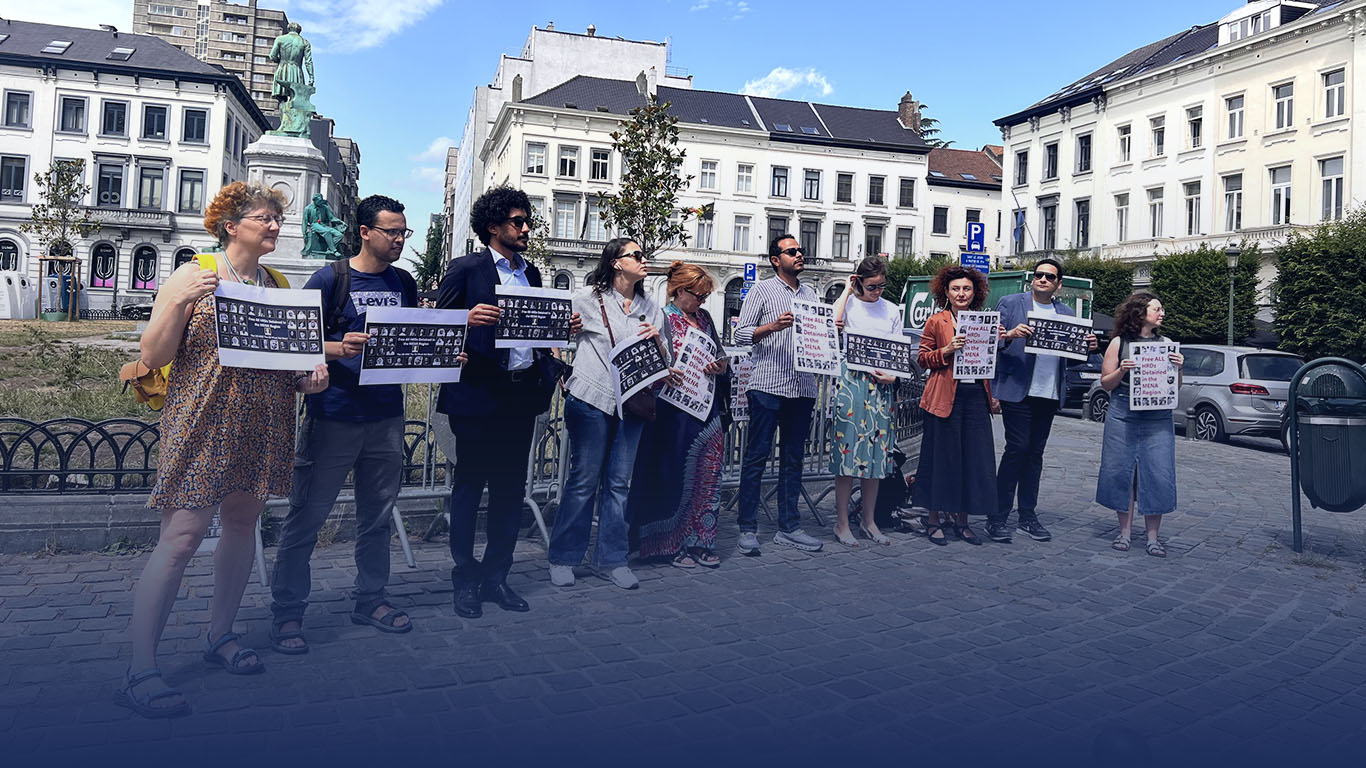
On Human Rights Day 2025, the region faces a reality in which freedom of expression, peaceful protest, community organising, and work in digital spaces are subjected to escalating security and legal pressure in most Middle East and North Africa (MENA) countries. Since the adoption of the Universal Declaration of Human Rights in 1948, the gap has remained wide between texts that affirm dignity, freedom, and participation, and practices that subject these rights to the logic of security and political control.
In recent years, HuMENA, drawing on its direct work in the region and on the CIVICUS Monitor, has documented that all MENA countries today fall within the three most restrictive categories of civic space: “closed”, “repressed”, or “obstructed”, with not a single country classified as having an “open” civic space. This categorisation does not capture every complexity on the ground, but it clearly reflects the fact that freedom of association, peaceful assembly, and expression are no longer treated as guaranteed rights, but as a narrow space that can be restricted or punished at any time through existing legal and security frameworks.
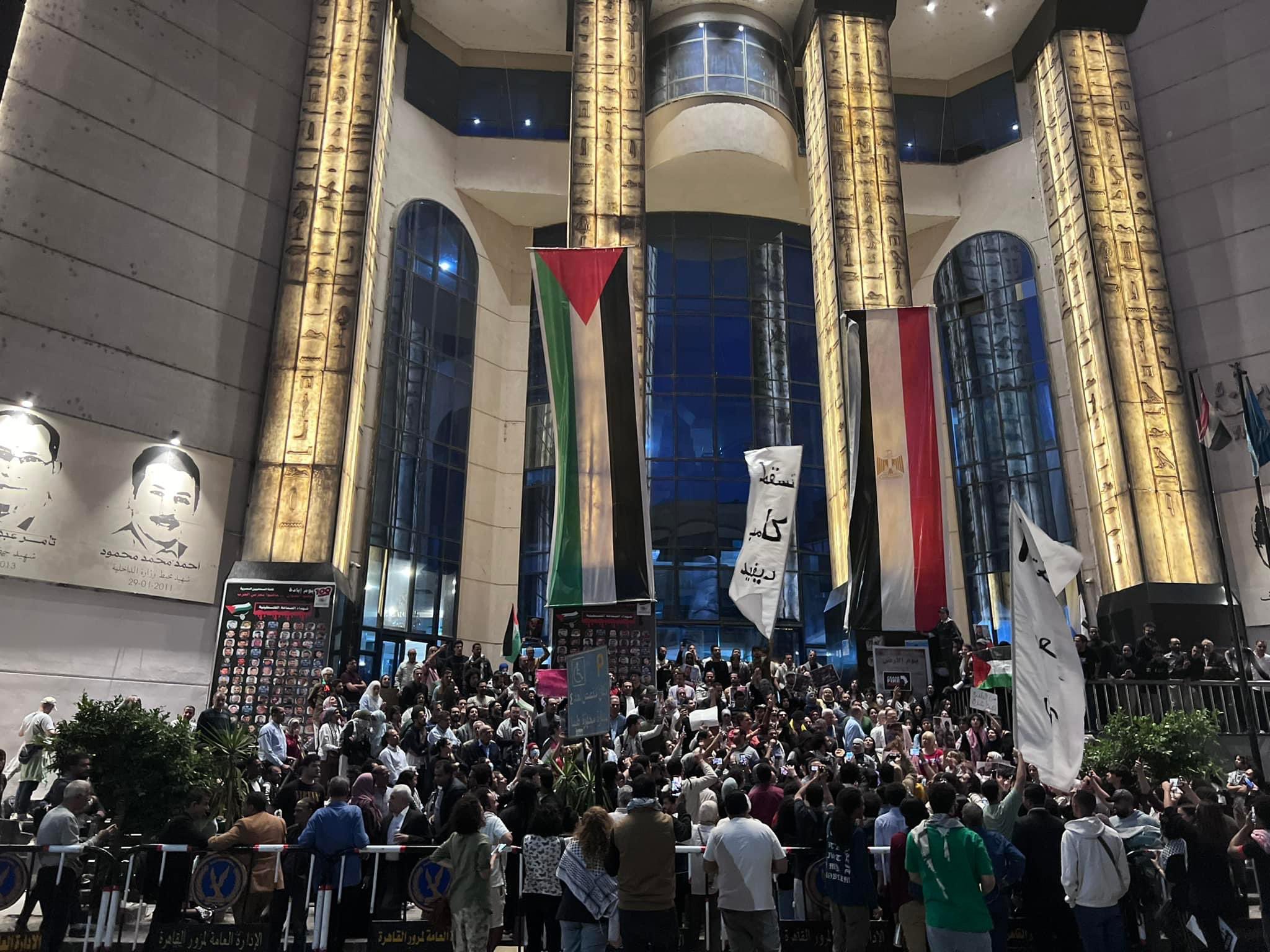
In Egypt, HuMENA has recorded, based on field follow-up and reports from local and international partners, the continued use of counter-terrorism laws, cybercrime legislation, and association laws to create an environment in which independent human rights work is almost impossible inside the country. Prolonged pre-trial detention, “recycling” of cases, travel bans, and asset freezes are repeatedly used against human rights defenders, journalists, and political opponents solely because of their peaceful work or documentation of violations.
In Tunisia, HuMENA and partner organisations have followed a clear pattern of backsliding in constitutional and institutional guarantees and in judicial independence, together with an expanded use of emergency decrees, foremost among them Decree-Law 54 on cybercrime. Over the past two years, this decree has been used to prosecute journalists, lawyers, and activists over critical opinions or coverage of political and human rights issues, in parallel with large cases such as the so-called “conspiracy against state security”, which has further entrenched the use of criminal justice tools to manage political dissent.
In Bahrain, HuMENA’s monitoring and review of specialised human rights reporting show that dozens of political prisoners and human rights defenders remain behind bars, serving long or life sentences, amid consistent documentation of torture and ill-treatment and very weak accountability mechanisms. Civic space is effectively closed, and organised political life is tightly constrained, leaving the scope for public work at its lowest levels.
In Lebanon and Morocco, HuMENA has documented a mix of vibrancy and restriction. Grassroots initiatives, independent media platforms, and discussion spaces still exist, but this margin is fragile and can be quickly narrowed through security summons, criminal defamation and cybercrime cases, smear campaigns, and pressure on protests. The classification of civic space in both countries as “obstructed” reflects the existence of room for public action, but without real guarantees that it will persist or expand, with the highest costs often borne by the most independent defenders and organisations.
In Palestine and the occupied Palestinian territory, information documented by HuMENA overlaps with the findings of specialised Palestinian and international organisations on civic space restrictions in the context of occupation, attacks, and blockade. Palestinian human rights organisations are targeted with closure or criminalisation; journalists and protesters are targeted while covering or documenting events on the ground; and Palestinians in Gaza live under unprecedented levels of killing, destruction, and siege. According to recent UN data relied upon by HuMENA, between 7 October 2023 and late November 2025, approximately 69,785 Palestinians were killed in Gaza and 170,965 were injured, alongside widespread destruction of essential infrastructure, including hospitals, schools, and water and electricity networks. In such a context, the meaning of “civic space” is reduced to people’s ability to survive and access humanitarian response, far more than their ability to participate or hold authorities to account.
These patterns do not stem only from isolated security decisions, but from an interlocking legal and policy architecture. In several countries where HuMENA works, it is clear that definitions of “terrorism” and “threats to national security” have been expanded to encompass peaceful dissent and human rights work; that association laws are used to control registration, funding, and activities, keeping independent organisations in a constant state of legal and administrative vulnerability; that cybercrime laws have become an entry point for prosecuting a post, a tweet, or a media investigation; and that cases with a fundamentally rights-based character are referred to exceptional or specialised courts instead of ordinary courts.
In multiple case files that HuMENA has followed, digital repression and transnational repression have become a fixed part of the landscape. Cybercrime legislation is used in several countries to criminalise peaceful online content, ranging from expressions of solidarity and policy criticism to independent documentation of corruption and abuses, in parallel with the expansion of digital surveillance and the use of advanced spyware targeting human rights defenders and journalists. HuMENA and its partners have also documented cases of cross-border repression, including threats and harassment of activists in exile, the summoning or targeting of their family members at home, and the use of judicial cooperation channels and deportation procedures in cases that are primarily political in nature.
In view of this reality, governments in the region have clear responsibilities. There is a need for a genuine review of the legal and policy framework used to close civic space, including amending the most restrictive provisions in counter-terrorism, cybercrime, association, and assembly laws; ending the prosecution of individuals solely for the peaceful exercise of their rights to expression, association, and protest; stopping the referral of civic freedoms cases to exceptional courts; and taking concrete steps to combat torture and ill-treatment and to suspend the application of the death penalty as a step towards its abolition.
In parallel, HuMENA considers that international partners, including the European Union and other states with significant political and economic influence in the region, cannot limit themselves to rhetorical affirmations of human rights while maintaining policies that prioritise security, migration, and energy above all else. Linking political, security, and economic cooperation with governments in the region to the protection of civic space and respect for fundamental rights has become a condition for any sustainable stability. This requires a review of policies on arms exports and surveillance and spyware technologies to actors involved in serious violations, and the development of protection pathways and dedicated humanitarian visas for human rights defenders at risk, particularly victims of transnational repression, to ensure that asylum and migration frameworks are not turned into additional tools for pressure or political bargaining.
Over recent years, HuMENA has worked to document and monitor shifts in civic space, legal frameworks, and security practices across a number of MENA countries, and to accompany human rights defenders and independent organisations inside countries and in exile. This has included providing knowledge support and practical tools, building links with protection and solidarity networks, and helping to bring defenders’ experiences into policy and human rights debates at national, regional, and international levels. HuMENA has also engaged in multiple advocacy processes before the United Nations, the European Union, and other mechanisms, with the aim of making the protection of civic space and fundamental rights a visible component of policy towards the region.
HuMENA will continue working to strengthen tools for monitoring and analysis, expand its support to human rights defenders, and refine advocacy priorities towards governments and international partners.
In this context, Mostafa Fouad, Executive Director of HuMENA for Human Rights and Civic Engagement, states:
“When civic space is closed, demands for freedom and justice do not disappear; they are pushed into more fragile and dangerous spaces. Protecting human rights defenders today is the minimum needed to preserve any possibility of democratic change tomorrow.”
On Human Rights Day 2025, the real measure of commitment by MENA states and the international system to human rights will be found not in statements, but in decisions taken, laws and policies reviewed, and in the extent to which human rights defenders and independent organisations are able to continue their work with a wider margin and lower cost, in their own countries, in digital spaces, and across borders.